Custom Wall Panels for a Lobby People Stop to Photograph
Walk into most offices and the first wall you see is doing nothing. Beige, maybe a framed stock photo of a handshake, a thermostat somebody keeps fighting over, and a breaker box with a dent in it that everyone has agreed not to mention. That wall is prime real estate, and it is being wasted. Custom wall panels for a lobby fix that in one move. They cover the ugly stuff, they give the room a point of view, and at Colorado Ski Chairs they are the piece visitors stop and photograph on the way past reception, which is not a sentence you expect to write about a breaker box.
Where These Panels Actually Came From
Here is the honest origin story, because it is better than a marketing one. The Design with Impact custom wall panels started as a way to hide breaker boxes and cover up wall damage. That is it. A client had an electrical panel parked in the middle of an otherwise clean wall, another had a patch of drywall that never quite matched after a plumbing repair, and the shop built panels to make the problem disappear.
About half of what these panels do is still exactly that. They hide the stuff you cannot move and would rather not look at. The other half is what happened by accident. Once a wall has a hand painted mountain range on it, or a resort profile, or a run somebody in the office actually knows by name, people stop walking past it. They stop, they look, and more than a few of them pull out a phone. A fix for a dented breaker box turned into the best wall in the building. Colorado Ski Chairs leaned into that, and now custom wall panels for a lobby are one of the shop’s steadiest branded builds.
There is a lesson buried in there about Colorado Ski Chairs generally. Most of what the shop makes started as a practical answer to a real problem, not a product somebody dreamed up to sell. The ski chairs came from piles of retired skis that were too good to toss. The panels came from an ugly wall. That is usually how the good stuff happens.
What a Custom Wall Panel Actually Is
Let’s get concrete, because “wall panel” could mean almost anything. A Colorado Ski Chairs panel is a built-to-size piece that mounts to your wall and carries a hand painted scene. The scene is painted by hand in weatherproof enamel, the same kind of paint used on fire hydrants. If you have ever wondered why a fire hydrant still looks sharp after fifteen years of sun, rain, and snow, that is the paint. It does not flake off in a season, and it does not care whether the panel lives inside a climate-controlled lobby or outside on a patio wall.
The panels are built for indoor or outdoor use, which matters more than it sounds. A lot of wall art quietly assumes it will spend its whole life in a dry, shaded hallway. These do not. You can put one behind a reception desk, and you can put one on an exterior wall by the front entrance where the afternoon sun hits it, and the same panel holds up in both spots.
Because they are built to the wall rather than picked off a size list, the dimensions follow your space instead of the other way around. If the wall is tall and narrow, the panel is tall and narrow. If it is a wide stretch behind a conference table, the panel runs wide. You are not trimming your idea to fit a catalog, and you are not stuck with a standard rectangle that leaves two awkward feet of blank drywall on either side. This is the part that separates real custom wall panels for a lobby from a poster in a frame.
Where These Panels Belong
The short answer is almost any wall that is currently earning nothing. The longer answer is worth walking through, because the panels read differently depending on where they land.
In a lobby or a reception area, a panel sets the tone before anyone says a word. A visitor forms an opinion about a company in the first ten seconds, usually before they have shaken a hand, and a blank wall with a buzzing clock tells them one thing while a hand painted mountain range tells them another. For a Colorado business especially, custom wall panels for a lobby say “we are actually from here” in a way that a logo on glass never quite manages.
In a boardroom, a panel becomes the backdrop for every meeting, every video call, and every photo that gets taken when a deal closes. People underestimate how often a boardroom wall ends up on camera now. A clean painted scene behind the head of the table beats a whiteboard with last quarter’s numbers still ghosted into it.
In a break room, the job is different and a little kinder. A break room panel is there for the people who already work in the building, not for visitors. It is the wall somebody looks at while the coffee brews, and a mountain scene or a familiar local run does quiet work on a Tuesday afternoon. It says the company spent a little thought on the room where people take a breath.
And on an outdoor wall, by an entrance, a patio, or a courtyard, the weatherproof build finally gets to show off. Most decor cannot go there. These can.

How Your Logo Goes On, and Why It Is Never Painted
This is the part people get wrong when they imagine a branded panel, so it is worth being plain about. The scene on the panel is hand painted. Your logo is not.
A logo is a precise thing. It has an exact shade of blue, an exact weight to the letters, a registered shape that your brand guidelines probably run several pages defending. Hand painting a logo, even by a skilled painter, introduces tiny variations, and tiny variations on a logo read as “off” even when nobody can say why. So Colorado Ski Chairs does not paint your logo. It goes on as a logo decal floated onto the painted background, which holds the mark’s exact shape and color the way your brand team expects.
There are alternatives, each priced a little differently. An aluminum applique gives you a crisp, dimensional metal mark that catches light. A plastic applique is a lighter, lower-cost version of the same idea. And the third option, the one people actually remember, is a laser cut logo made from upcycled skis and snowboards. That one turns your mark into a physical object cut from old gear, which is a very Colorado Ski Chairs way to put a brand on a wall and tends to be the version clients point at when they show the panel off.
So the rule is simple. Scenes get painted. Logos go on as a decal, an aluminum or plastic applique, or a laser cut mark. If anyone promises you a freehand painted corporate logo, they are promising you a headache.
The Scenes You Can Put on a Panel
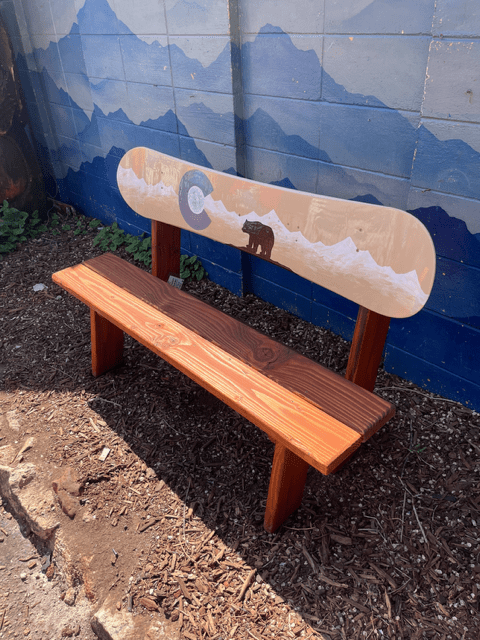
Because the painting is done by hand, the scene is wide open. The shop’s bread and butter is mountains, and for good reason. A Colorado range, a particular resort profile, a sunset over a ridgeline, the kind of view that makes people who live here a little homesick when they travel. But the scene does not have to be a generic postcard. The ones that land best are specific. A run somebody in the office knows by name. The view from a company cabin. The ridgeline you can see from the parking lot on a clear morning.
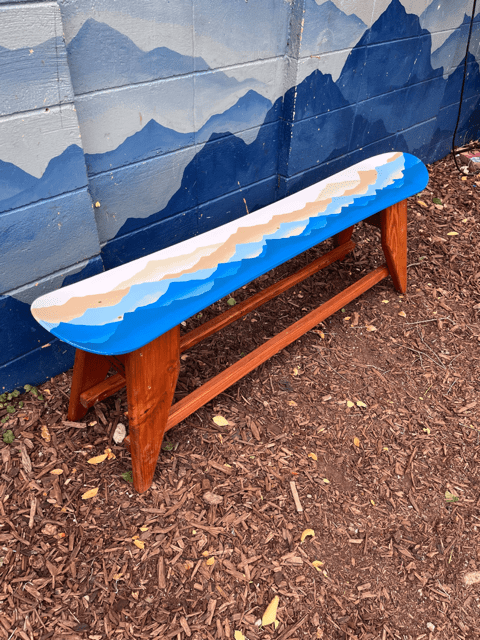
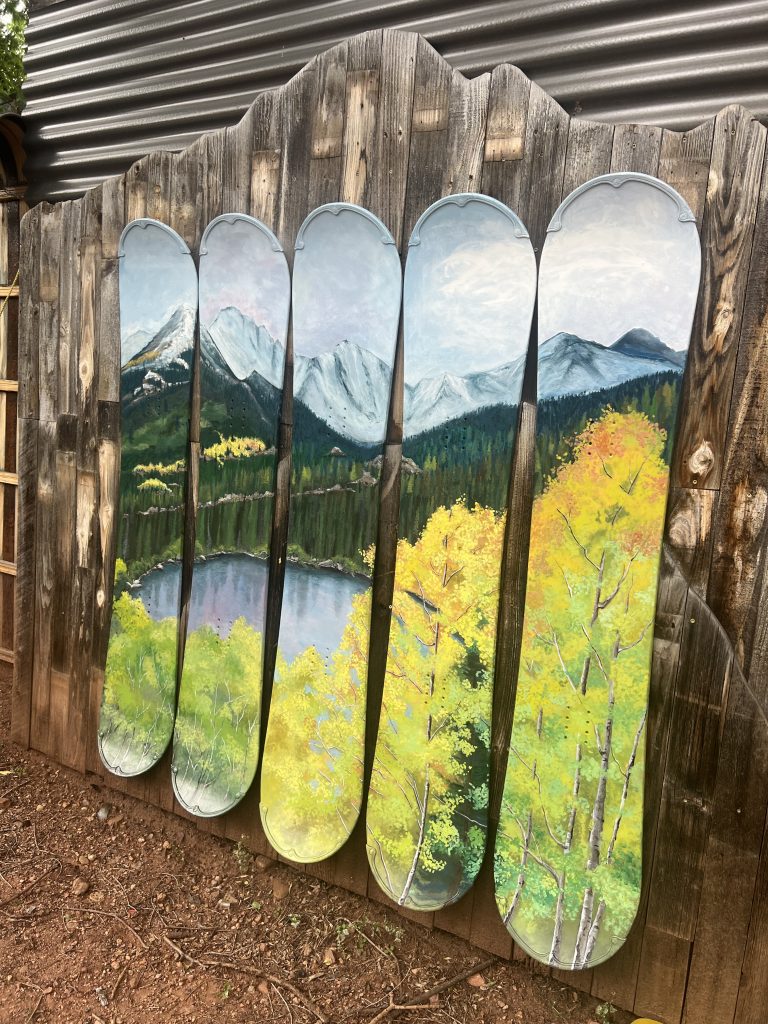
You can also go somewhere other than the mountains entirely. The panels are a blank canvas, and the painter can work from a photograph, a sketch, or a description. The featured build pictured here is a sunset mountain lake scene carried across panel sections, the sort of thing that reads as one continuous view from across the room and reveals its seams only when you walk right up to it.
If the panel is meant to represent the company more than the scenery, that is where the brand elements come in, with the scene as the setting and the logo added the right way, as covered above. The balance is yours. Some clients want the mountains front and center and the logo small and tasteful in a corner. Others want the brand to lead. Both work.
Backlighting, and Making a Panel the Focal Point
Most of the time a panel is the backdrop. It sets a mood behind a desk or a table and lets the people in the room be the main event. But sometimes you want the wall itself to be the thing, and that is what the integrated backlighting option is for.
Backlighting turns a panel from decor into a feature. Lit from behind, a mountain ridgeline glows, the scene gains depth, and the wall becomes the anchor of the room instead of the setting for it. It is the difference between a nice painting and the wall people talk about. It is an add-on, chosen when the panel is meant to be the focal point rather than the background, and it is the kind of detail that makes a lobby feel designed rather than decorated.
Not every panel needs it. A break room panel probably does not. A flagship-lobby panel, the one meant to be the first and last thing a visitor remembers, usually earns it.
A Word on the Lobby, Since That Is Where It Earns Its Keep
Every room in the building can use a panel, but the lobby is the one that pays for itself. Think about what a lobby is actually doing. It is the handshake before the handshake. A client, a candidate, a vendor, an inspector, whoever walks in, they spend a minute or two in that space with nothing to do but form an impression, and they will form one whether you have curated the room or not. A tired lobby says the company is tired. A sharp one says the opposite, and it says it before anyone from the company has said a thing.
That is why custom wall panels for a lobby tend to earn their keep faster than panels anywhere else in the building. A boardroom panel is seen by the handful of people who get invited into the boardroom. A break room panel is seen by staff. A lobby panel is seen by everyone, every day, and it is the one spot where decor converts directly into reputation. Hospitality operators figured this out a long time ago, which is why hotel and lodge entrances are designed to be photographed. An office lobby can borrow the same trick for the price of one good wall.
There is a recruiting angle too, quiet but real. The people a company most wants to hire are also the people who have options and notice details. A lobby that looks like someone cared is a small signal that the place might be worth working for. It is not going to close a candidate on its own, but it is the kind of first impression that does not hurt, and in a tight market the small things add up. A wall that makes a visitor say “oh, this is nice” is doing more work than its square footage suggests.
Not Only for Offices
The name says home and office, and the home half is easy to forget because the branded builds get the attention. But the same panel that anchors a corporate lobby does lovely work in a house. A great room with a two-story wall that has defeated every piece of art the owners have tried. A finished basement bar that wants a run or a resort profile behind the bottles. A covered patio where most decor would warp in a season and this one will not.
For a home, the logo question usually goes away and the scene is the whole point. A family can put the view from the cabin on the living room wall, or the mountain they got engaged on, or the run the kids learned to ski. Because the scene is hand painted from whatever reference you provide, a panel can hold a specific, personal view rather than a generic one, and that is what turns a decoration into something people are actually attached to. A home panel is less about impressing a visitor and more about looking at something you love on the wall you look at most. Both jobs, the corporate one and the personal one, come off the same bench in Manitou Springs.
Built to Last, Inside or Out
A branded piece is only worth it if it still looks right in five years, and this is where the weatherproof enamel does its quiet work. The fire-hydrant paint is built to survive sun, temperature swings, and moisture without fading or flaking. That is why the same panel can live indoors or outdoors with no change to the build.
Indoors, that durability mostly means the colors stay true and the surface wipes clean. A lobby panel takes dust, the occasional shoulder, and years of HVAC cycling, and it shrugs all of it off. Outdoors is the real test, and it is the one most wall art cannot pass. An exterior panel by an entrance deals with direct sun, driving rain, and a Colorado freeze-thaw cycle that destroys lesser finishes, and the enamel holds. You are not repainting it every couple of seasons.
The practical upshot is that you can treat these panels as a long-term fixture, not a seasonal decoration. You put it up, and then you mostly forget about the maintenance and just enjoy the wall. For a business, that also means the piece keeps representing you properly long after the install, which is the whole point of putting your name near it.
How Ordering and Pricing Work
Here is where custom wall panels for a lobby stop behaving like a normal online product, and that is by design. The listed figure you will see is $695, but that is a starting reference, not a final price, because branded and built-to-size work is quoted rather than sold off a shelf. The real number depends on three things: how big the panel is, what finish it gets, and how the mark goes on.
Size is the obvious one. A panel for a nook costs less than a panel that runs the length of a boardroom. Finish matters too, including whether you add integrated backlighting. And the branding choice moves the price, because a decal, an aluminum applique, a plastic applique, and a laser cut logo from upcycled skis are four different amounts of work and material.
So the way to get a real price is to call. The number is 303.775.7273. Have your wall dimensions handy and your artwork ready, a logo file and any reference images for the scene, and the shop will price it properly for your space. One phone call, honest pricing, no mystery. If you would rather see the listing first, the custom wall panel product page lays out the basics, and a call fills in the rest.
Production is made to order in Colorado, so a panel is painted for you rather than pulled from a shelf. Plan a few weeks for a branded build, more if the scene is elaborate or the panel is large, and the shop will give you a straight timeline when you call.
Why Colorado Ski Chairs
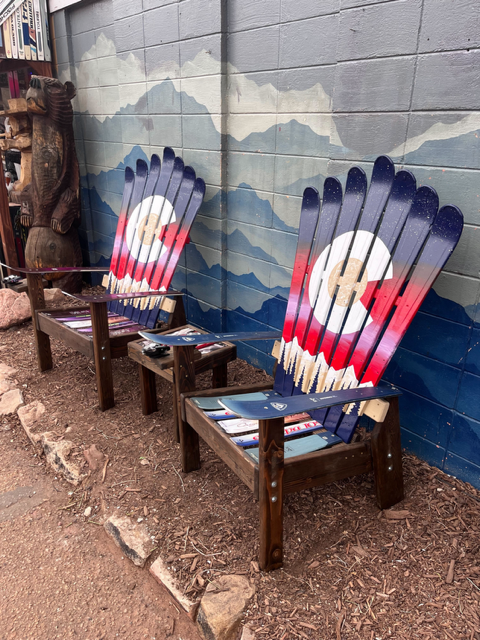
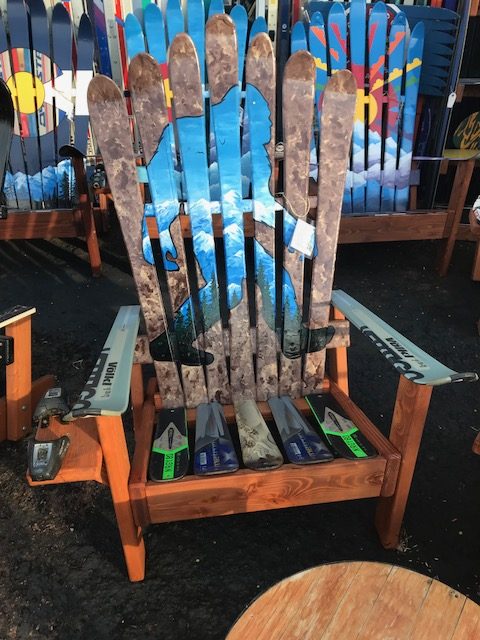
There are companies that will print your logo on just about anything, and if that is what you want, they are easy to find. This is a different thing. Colorado Ski Chairs is a small shop in Manitou Springs that builds furniture and decor from reclaimed skis and snowboards, hand paints its scenes, and ships nationwide, and the custom wall panels are cut from that same cloth.
What you get is a piece that is actually made, by actual people, in Colorado, with a real craft behind it and a story you can tell. When a visitor asks about the wall, “we had it custom painted by a shop in Colorado that works in reclaimed ski gear” is a better answer than “we ordered it.” The panels sit alongside the shop’s custom designs and its wider range of wall art, so if a panel is the start of a larger idea for your space, the rest of the catalog can carry the theme through.
And there is the simple matter of the wall itself. You started with a breaker box and a dent. You end with the piece people photograph on the way in. That is a good trade.
Frequently Asked Questions
Can my company logo be painted onto the panel?
No, and that is on purpose. The scene is hand painted, but a logo goes on as a logo decal floated onto the painted background so it holds its exact shape and color. Aluminum appliques, plastic appliques, and a laser cut logo made from upcycled skis and snowboards are the alternatives, each priced differently. Hand painting a logo introduces small variations that make a brand mark look off, so the shop does not do it.
Can a custom wall panel go outside?
Yes. The panels are hand painted in weatherproof enamel, the same kind used on fire hydrants, and are built for indoor or outdoor use. An exterior panel by an entrance or on a patio wall holds up to sun, rain, and Colorado freeze-thaw without a special outdoor version.
Why is there a price listed if the work is quoted?
The $695 figure is a starting reference. Because panels are built to the size of your wall and the finish and branding vary, the real price depends on dimensions, finish, backlighting, and how the mark goes on. Call 303.775.7273 with your wall dimensions and artwork for an accurate quote.
What can the painted scene be?
Almost anything. The shop’s most popular scenes are Colorado mountain ranges, resort profiles, and sunsets, but because the scene is painted by hand the painter can work from your photo, sketch, or description. The most memorable panels tend to be the specific ones, a run or a view the people in the building already know.
Give the Wall Something to Do
That blank wall behind reception is not going to get more interesting on its own. Custom wall panels for a lobby turn it into the best first impression in the building, hide whatever you would rather not look at, and carry your brand the right way, with the scene painted and the logo done properly. Take a look at the Design with Impact custom wall panels, then call 303.775.7273 with your wall dimensions and your artwork, and let’s price a wall worth photographing.