The Dog Feeding Station for a Kitchen That Looks Intentional
The dog has been eating off the kitchen floor for nine years and you have watched him do it a thousand times without ever really looking. Then one morning you catch the way his shoulders dip and his neck folds down to reach the bowl, and you cannot unsee it. A dog feeding station for a kitchen fixes that in about four seconds of setup, and the Ski Dog Bowl Set from Colorado Ski Chairs does it with nine inches of lift, two steel bowls, and a frame cut from real retired skis.
Nine Inches Is the Whole Idea
Most products try to sell you a feeling. This one is selling you a measurement. Nine inches off the floor is the number that matters, because it is roughly the difference between a big dog eating with his neck bent and a big dog eating with his head level. Watch a Lab or a shepherd or any of the long legged mutts that end up in Colorado households. They stand over a floor bowl in a sort of half crouch, front legs braced, spine curved, and they do it two or three times a day for a decade. Nobody dies from it. It just is not comfortable, and the fix costs about as much as four bags of the good food.
Colorado Ski Chairs did not set out to become a dog company. The shop builds Adirondack chairs and benches out of retired skis and snowboards, and for years the offcuts piled up. Ski tips, tails, sections of sidewall with graphics too good to burn. Somebody in the shop had a tall dog, built a raised stand out of the scrap on a slow afternoon, and put it in the kitchen. Friends saw it. Friends asked for one. That is the entire origin story, which is more honest than most.
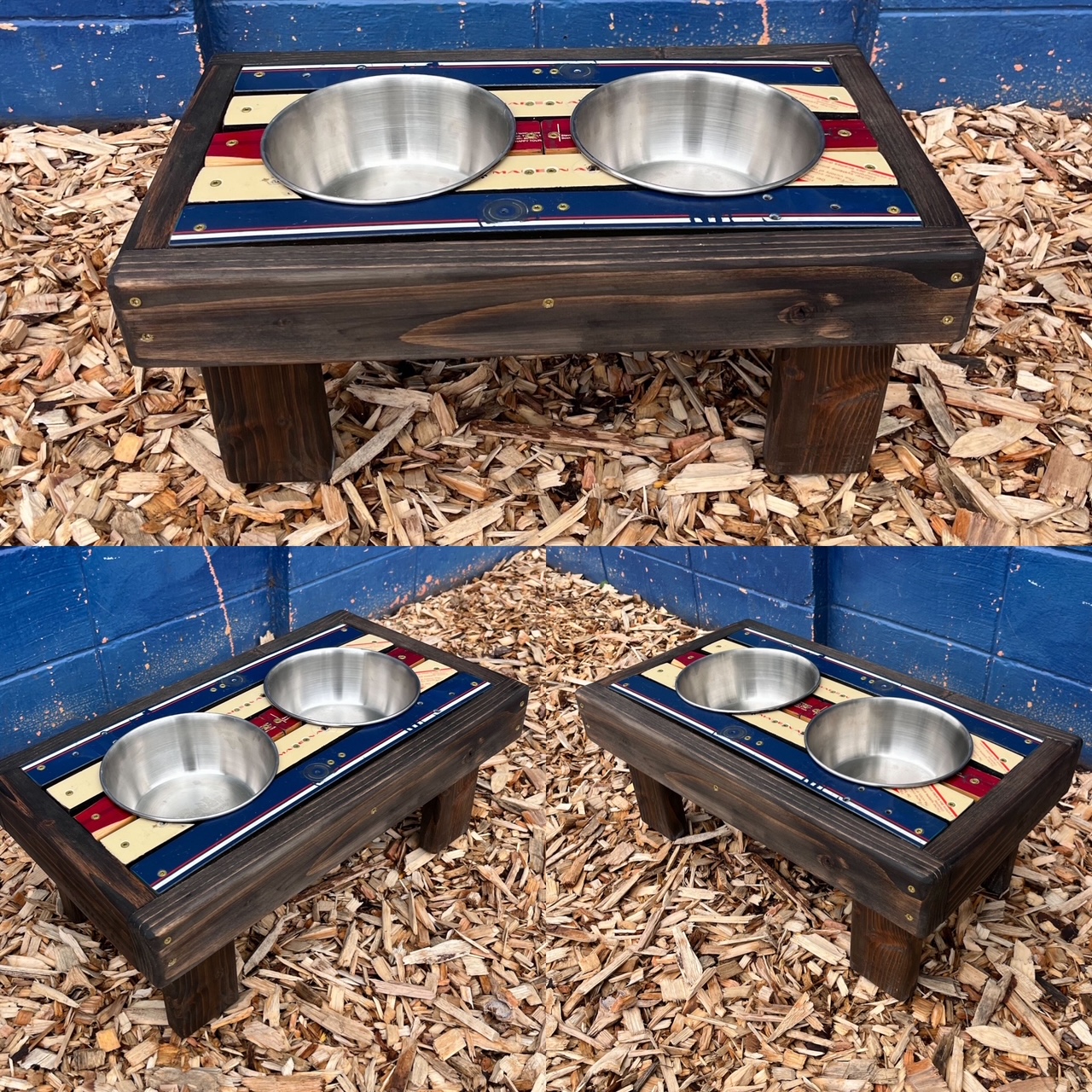
What came out of it is a dog feeding station for a kitchen that measures 24 inches long by 12 inches wide by 9 inches tall, holds two stainless steel bowls, and is built from real retired skis and wood. It sits low and tight, tucks against a wall, and does not read as equipment. That last part is the thing people do not expect. A raised feeder is usually one of two things: a chrome contraption that looks like it belongs in a vet clinic, or a plastic tray in a color nobody chose on purpose. This is neither. It is a small piece of furniture that happens to hold dinner.
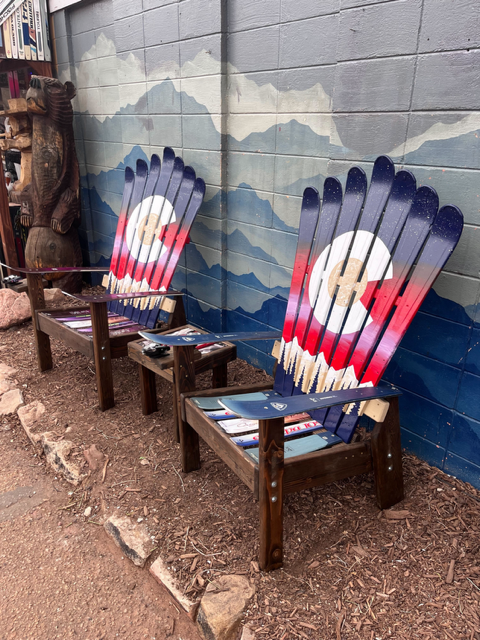
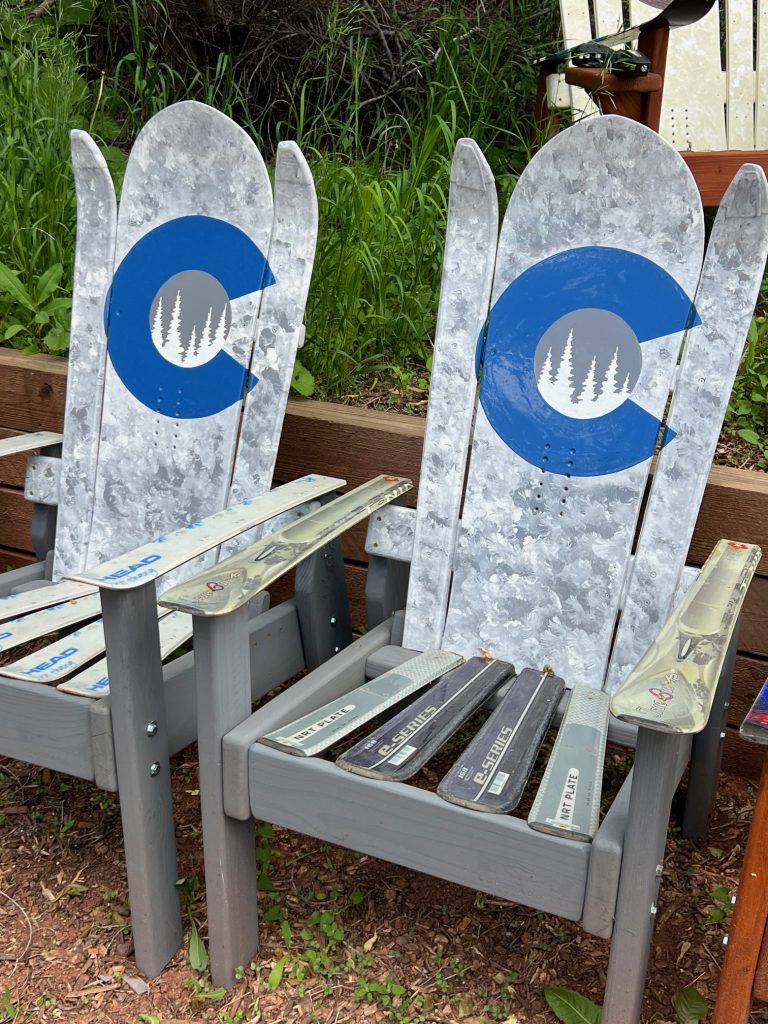
The ski part is not decoration bolted on afterward. The top sheets stay visible, graphics and all, so the piece carries whatever a pair of skis from 1998 looked like when it was new and loud. Old edges catch the light. No two stands come out the same, because no two retired skis are the same, which means the one you get is genuinely the only one of it that exists. That is a strange thing to be able to say about a dog bowl holder, and it is true.
What It Is, and What It Is Made Of
Here are the facts without the music. The Ski Dog Bowl Set is a raised feeding stand built on a wood frame with real retired skis worked into the structure and the visible faces. It is 24 by 12 by 9 inches. It is hand painted and finished, and the finish is water and weather proof, so it handles kitchen spills and back porch weather equally. It has a low profile footprint. It is built in Manitou Springs, Colorado, and it ships nationwide. It lists at $149, down from $199, and it is in stock.
The pictured version comes in navy, red and cream with two steel bowls dropped into the top, which is a combination that sounds busy on paper and reads as sharp in a kitchen. Colors vary from build to build because the donor skis vary. If you want to drive the palette yourself, there is a separate pick your colors version of the same build, hand painted to whatever you have in mind and made to order. More on that further down.
A word about materials, because Colorado Ski Chairs gets this question constantly and the honest answer is less romantic than people hope. A dog feeding station for a kitchen does not eat a mountain of gear. An Adirondack ski chair from this shop takes four to five pairs of skis, which surprises almost everybody and is one of the reasons a chair costs what it costs. A feeder stand this size uses far less than that. The shop builds the standard version from its own inventory of retired and vintage skis, the pairs that came in as donations and trade ins and garage cleanouts over the years, so nobody has to hand over anything to get one.
If you do have a pair that means something, that is a different conversation and a good one. People send in the skis a parent rode, or the pair they learned on, or the ones that came off a leg that does not ski anymore. The shop can work a meaningful pair into the visible parts of a small build like this and confirm the plan from photos before anything gets cut. If the skis are already long gone, the shop will source a close match by brand and era and will tell you plainly that it is a match rather than pretending it is the original pair. That honesty matters more than the sentiment, and it is the shop’s standing policy on every sentimental build.
What this piece is not: it is not a chair, and it is not a chairlift. Colorado Ski Chairs builds genuine retired lifts and handcrafted replica lifts both, and the product name always tells you which is which. This is a small feeder stand. No lift, no provenance, no story about a mountain it came off, because there is not one. It came off a workbench in Manitou Springs.
Where a Dog Feeding Station for a Kitchen Actually Goes
The obvious answer is the kitchen, and most of these do end up there, usually in the corner by the back door or against the run of wall between the cabinets and the pantry. The 12 inch depth is what makes that work. A lot of raised feeders are closer to 16 or 18 inches deep and they stick out into the walking lane, which means somebody clips it with a foot every third day and kibble goes under the fridge. Twelve inches sits inside the footprint of most cabinet runs. You stop noticing it, which is the goal.
The second most common home is the mudroom, and in a Colorado house that room does a lot of work. Boots, packs, leashes, the wet dog after a Monument Creek walk. A feeder in there keeps the food traffic out of the kitchen entirely, and since the finish is weather proof it does not care about snowmelt dripping off a jacket two feet away. If the mudroom is also where the dog comes in filthy, being able to wipe the whole stand down with a wet rag is not a small thing.
Then there is the porch, and this is where the weather proof finish earns its keep. Plenty of these go outside, on a covered deck or a patio, as the summer feeding spot. The dog eats out there, nothing tracks in, and the stand lives through a Front Range hail season without swelling or peeling. People in mountain places do this a lot. If you have ever tried to feed a big dog on a windy deck using a plastic bowl, you know exactly why a stand with weight and grip is worth the money.
The fourth setting is the one the shop hears about from short term rental owners and cabin folks: the place where everything else in the house got chosen carefully and the dog corner is the last thing that still looks like an afterthought. If you have reclaimed barnwood on the walls and a ski bench in the entry and then a neon plastic mat by the baseboard, the mat is the thing guests photograph by accident. Swapping it for something built out of the same materials as the rest of the room closes that gap. Related pieces live under indoor decor and furniture, and the smaller builds are grouped under gift items.
Why Skis and Wood Instead of Plastic or Chrome
Walk the pet aisle and you get two options. The first is molded plastic, cheap and light, which is exactly the problem: a 90 pound dog shoves a light stand six inches across the floor every meal, and the plastic goes brittle and chalky in a sunny room after a couple of summers. The second is powder coated steel tubing, sturdy enough, and it looks like something you would see in a kennel. Neither one was designed to be seen from the couch.
Wood and ski laminate solve a few things at once. Weight, first. The stand has enough mass to stay put while a determined dog pushes a bowl around, which is the single most common complaint about budget feeders. Durability, second. A ski is a sandwich of wood core, fiberglass, steel edge and a printed top sheet, engineered to survive being driven into ice at speed by somebody who skis badly. As a furniture material it is almost comically overbuilt, and that is before you consider that it was headed for a landfill.
That last point is worth sitting with for a second. The skis in this stand already lived a full life. Somebody rode them for a decade, hung them in a garage for another decade, and then could not quite put them in the dumpster. Multiply that by every garage in Colorado and you get a genuinely enormous pile of fiberglass that nobody has a good plan for. Turning some of it into a dog feeding station for a kitchen is not going to save the planet. It is still better than the alternative, and it comes with better graphics.
Third thing wood solves: repair. Plastic cracks and you throw it out. A wood and ski build can be touched up, resealed, or repainted years later. The shop has refinished pieces that came back after a flood and after a puppy decided the corner was a chew toy. That is the quiet argument for buying one thing once instead of three things over six years, and for a 50 something who has already replaced the same cheap object four times, it is not a hard sell.
Sizing It to Your Dog, and to Your Bowls
Nine inches of lift suits medium and large dogs. The rough rule most people use is that the bowl rim should land somewhere around the height of the dog’s lower chest when he is standing normally, so he can reach down slightly without craning. For a Lab, a golden, a shepherd, a boxer or most of the 50 to 80 pound range, nine inches lands in that window. For a Dane or a wolfhound it will be too low, and the shop can talk through a taller build. For a corgi or a terrier it is too high and a floor bowl is the right answer, which is a thing a furniture shop will tell you out loud even though it costs them a sale.
If you are not sure where your dog falls, measure him. Have him stand square, run a tape from the floor to the bottom of his chest where it meets the front legs, and write the number down. Then call 303.775.7273 and say the number. That conversation takes two minutes and saves everybody a return. The shop would rather spend the two minutes than build the wrong height.
Bowls are the other half of the sizing question. The set comes with two steel bowls that drop into the openings, and steel is the right call for a reason that has nothing to do with looks: it does not hold a scratch the way plastic does, and a scratched plastic bowl is a bacteria hotel. If you have a strong opinion about bowl size, or your dog uses a slow feeder insert, or you need one water side deeper than the food side, ask before you order. Openings get cut to the bowl, so it is easier to get right the first time than to adjust later.
One more practical note. Two bowls at 24 inches apart means a dog can eat and drink without turning around, and for a household with two dogs of similar size, a lot of people buy two stands rather than trying to put four bowls on one. Two of these against a wall still take up less floor than one oversized plastic tray, and each dog gets a lane, which cuts down on the hovering.
Color, Paint, and the Pick Your Colors Version
The standard listing comes as it comes, painted and finished in the shop, with the donor ski graphics showing through. The navy, red and cream version in the photo is a good example of how that lands: the colors came from the skis, not from a catalog, so the combination has a logic to it that a paint chip never quite gets.
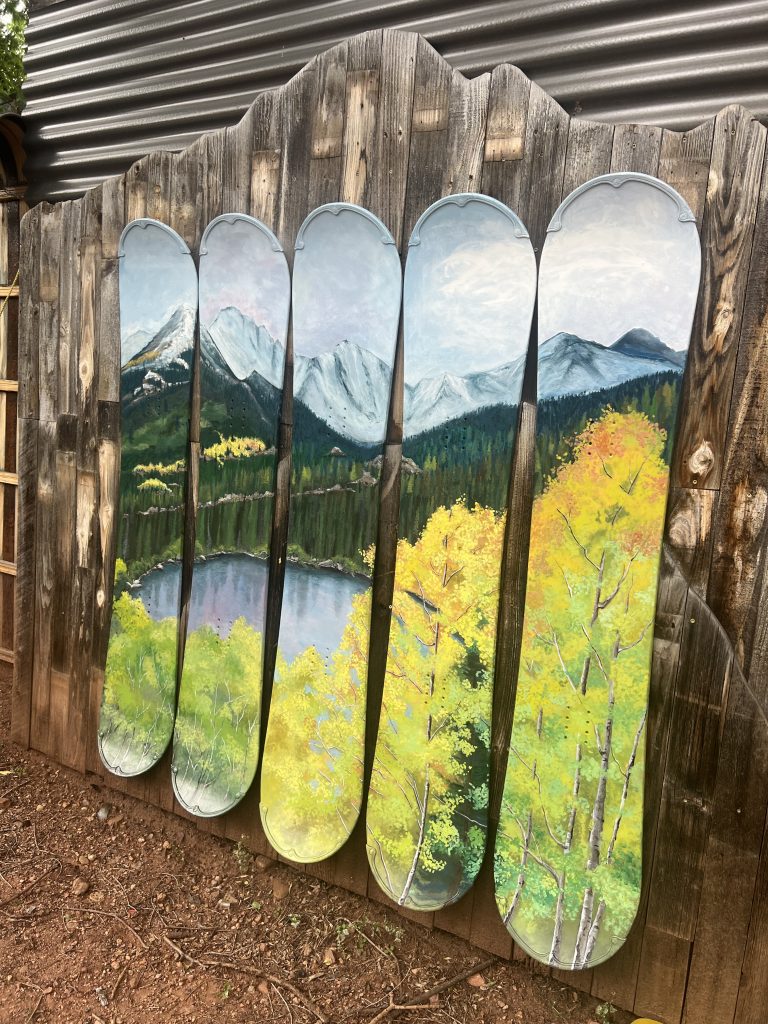
If you want to run the palette, the pick your colors listing is the same build with the painting opened up. People match a kitchen, match a mudroom, match a college, match a team. The shop has painted paw prints, mountain lines, initials, and at least one very specific shade of hunting orange that the customer insisted on and which, by all reports, looks great. Hand painted scenes and lettering are done in exterior oils and are entirely fair game.
Logos are the one place where the answer is different, and it is worth stating plainly because it comes up with every business order. A logo is never hand painted. It goes on as a logo decal, floated onto the painted background so the mark keeps its exact shape and its exact color, which freehand paint simply cannot do no matter how steady the hand. Aluminum appliques and plastic appliques are the alternatives, each priced differently, and they can go on the front or the back. Branded work is quoted on a call rather than listed, because the price depends on the mark, the method and the count. If you want your logo on a run of these, call 303.775.7273 and somebody will walk you through which of the three methods fits your mark.
Painted scenes, yes. Painted logos, no. That distinction is not the shop being difficult. It is the difference between a piece that looks handmade and a piece that looks like somebody tried to draw your trademark from memory.
Living With It: Spills, Weather, and the Long Haul
The finish is water and weather proof, and the practical meaning of that is you can be careless. Water bowl tipped over at two in the morning, the dog shook off right next to it, somebody set a wet boot on the end. None of that soaks in. Wipe it with a damp rag and move on. For a feeding station, which lives in the wettest square foot of the house, that is the whole ballgame.
Outside, the same finish handles sun, snowmelt and the particular violence of a Colorado hailstorm. The honest guidance is to put it somewhere with at least partial cover if you can, not because it will fail in the open but because anything living under direct high altitude UV year round will fade eventually, and a covered deck buys you years. Hose it off when it gets gross. That is the extent of the maintenance.
Long term, the thing that usually needs attention first is the paint on the wood, not the skis. The skis are the most durable part of the whole assembly and will look fine when everything around them has aged. If the painted surfaces ever dull out, they can be freshened, and the shop will talk you through doing it yourself or handle it if you ship the piece back. For a $149 object that is arguably more support than anybody expects, and it is consistent with how this shop treats its bigger builds.
Dogs are hard on things, so one final note on structure. This stand does not wobble and it does not slide easily, which covers the two failure modes that make people hate raised feeders. If a dog gets a paw under the edge and flips something lightweight, you get kibble across the room. There is enough weight here that it does not happen. The low profile footprint also means that when you do need to move it to sweep, you pick it up with one hand, which is the small convenience nobody thinks about until they own something that requires two.
The Gift Nobody Else Thought Of
This is the shop’s most reliable gift item, and the pattern is always the same. Somebody buys one for their own dog, lives with it for a month, and then buys three more for other people. A dog feeding station for a kitchen is a strange thing to be moved by, and yet it lands, because it is a gift for the dog that is really a gift for the person who loves the dog.
It works especially well in four situations. New puppy, where everybody else is giving toys and the puppy will outgrow a floor bowl in a year anyway. A new big rescue, where the household is suddenly solving problems they never had with the last dog. A housewarming for somebody who just bought a mountain place and is furnishing every corner at once. And the impossible friend, the one who has everything, except that nobody has ever given them anything for the golden retriever that has its own Instagram account.
At $149 it sits in a useful gift bracket. Substantial enough to be a real present, not so expensive that giving one feels like a statement. It also solves the problem of the gift that gets politely stored in a closet, because this one has a job. It is in use twice a day, every day, in the busiest room in the house. That is a higher hit rate than almost anything else you could wrap.
If you are buying for somebody else and you do not know the dog’s measurements, go with the standard nine inch version. It covers the broad middle of dog sizes, and it is far more likely to be right than a guess at a custom height. Gift recipients in Colorado tend to have exactly the kind of dog this was designed for.
Why Buy It From Colorado Ski Chairs
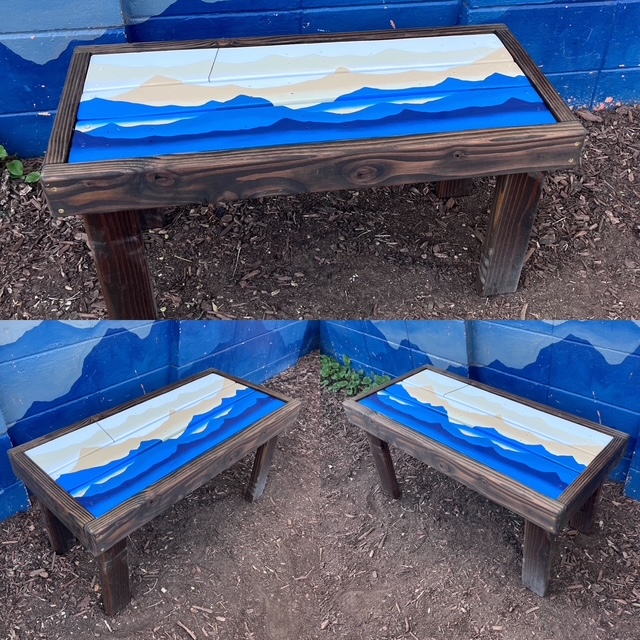
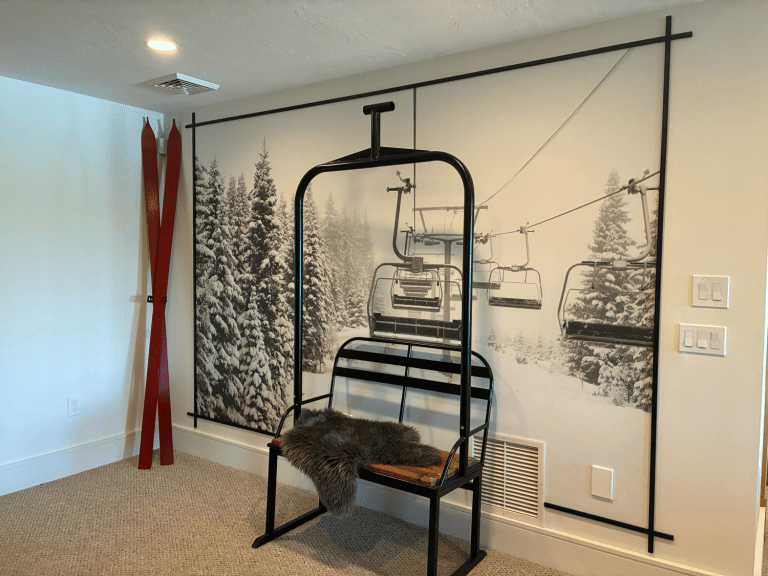
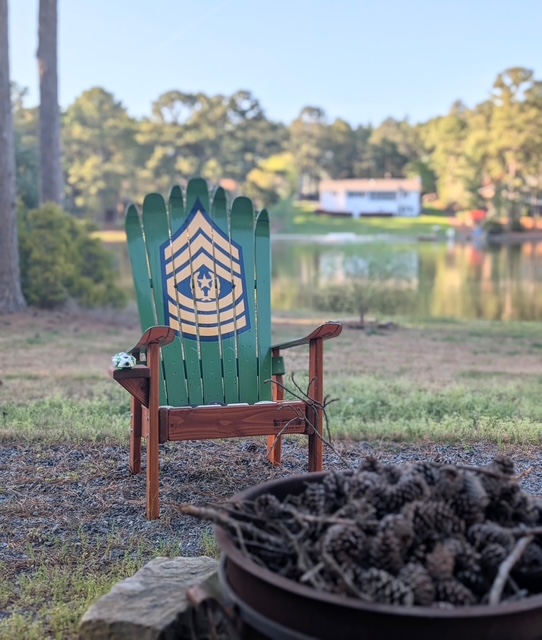
Colorado Ski Chairs builds furniture and decor from recycled and new skis and snowboards in Manitou Springs, Colorado, and ships nationwide. The catalog runs from Adirondack ski chairs and snowboard benches up to replica chairlift benches and genuine retired lifts, and down to small pieces like this one. Everything is built to order or built in small batches by the same people, which is why the shop can tell you on the phone whether a given height will work for your dog.
The practical advantage of buying a small piece from a shop that builds big ones is that the small piece inherits the methods. The same exterior finishes that have to survive a bench on an open patio in Leadville go onto a dog feeder. The same joinery sensibility that keeps a 400 pound capacity chair from racking shows up in a 24 inch stand that does not wobble. Shops that only make dog products do not have that problem to solve, so they do not solve it.
The other thing you get is a phone number that a person answers. 303.775.7273, and that is the only number for the shop. Call about sizing, call about bowls, call about getting your logo on a batch of twenty for an office. The answer you get will come from somebody who has actually built one.
How Ordering Works
The standard Ski Dog Bowl Set is listed at $149, reduced from $199, and it is in stock, so ordering it is a normal checkout. If you want the pick your colors version instead, that one is made to order and you tell the shop your color idea when you order, or call it in. For anything beyond color, a different height, custom bowl openings, a hand painted scene, a name, or a logo on a run of them for a business, start with a call to 303.775.7273 so the quote matches what you actually want.
Shipping goes nationwide out of Manitou Springs. Local customers can arrange pickup, and plenty of people in the Colorado Springs and Denver corridor do exactly that, partly to save the freight and partly because they want to see the shop. If you are driving up anyway, it is worth the detour.
Frequently Asked Questions
How many skis does it take to make a dog bowl stand?
Far fewer than a chair. An Adirondack ski chair from Colorado Ski Chairs takes four to five pairs of skis, while a 24 inch feeder stand uses a fraction of that. The shop builds the standard version from its own stock of retired and vintage skis, so you do not need to supply anything.
Can you build it from my own old skis?
Yes, within reason. The shop can work a meaningful pair into the visible parts of a small build like this and will confirm the plan from photos before cutting. If the original skis are gone, the shop sources a close match by brand and era and says so plainly rather than claiming it is the original pair.
How tall should a raised dog feeder be?
The bowl rim should sit roughly at the height of the dog’s lower chest when he stands normally. Nine inches, the height of this stand, suits most medium and large dogs in the 50 to 80 pound range. Measure from the floor to the bottom of your dog’s chest and call 303.775.7273 if the number is close to the edge of that range.
Can it live outside?
Yes. The finish is water and weather proof, so it handles a covered deck or patio year round. Partial cover is the better bet long term, mostly to slow fading from high altitude sun.
Can you put our company logo on them for an office?
Yes, and the method matters. A logo is never hand painted. It goes on as a logo decal floated onto the painted background, or as an aluminum or plastic applique, each priced differently. Branded and bulk pricing is quoted on a call at 303.775.7273.
One Less Thing You Have to Look At
You are not going to lie awake thinking about a dog bowl stand. But the plastic mat by the baseboard is one of maybe six small things in the house that quietly bug you, and this is the one you can fix this week for $149. The dog gets a better angle on dinner, the corner stops looking temporary, and a pair of skis that somebody rode into the ground in 1998 gets a second job. Take a look at the Ski Dog Bowl Set, or call 303.775.7273 and tell us about your dog.