The Wall Art for a Home Office That Climbs 2,768 Steps
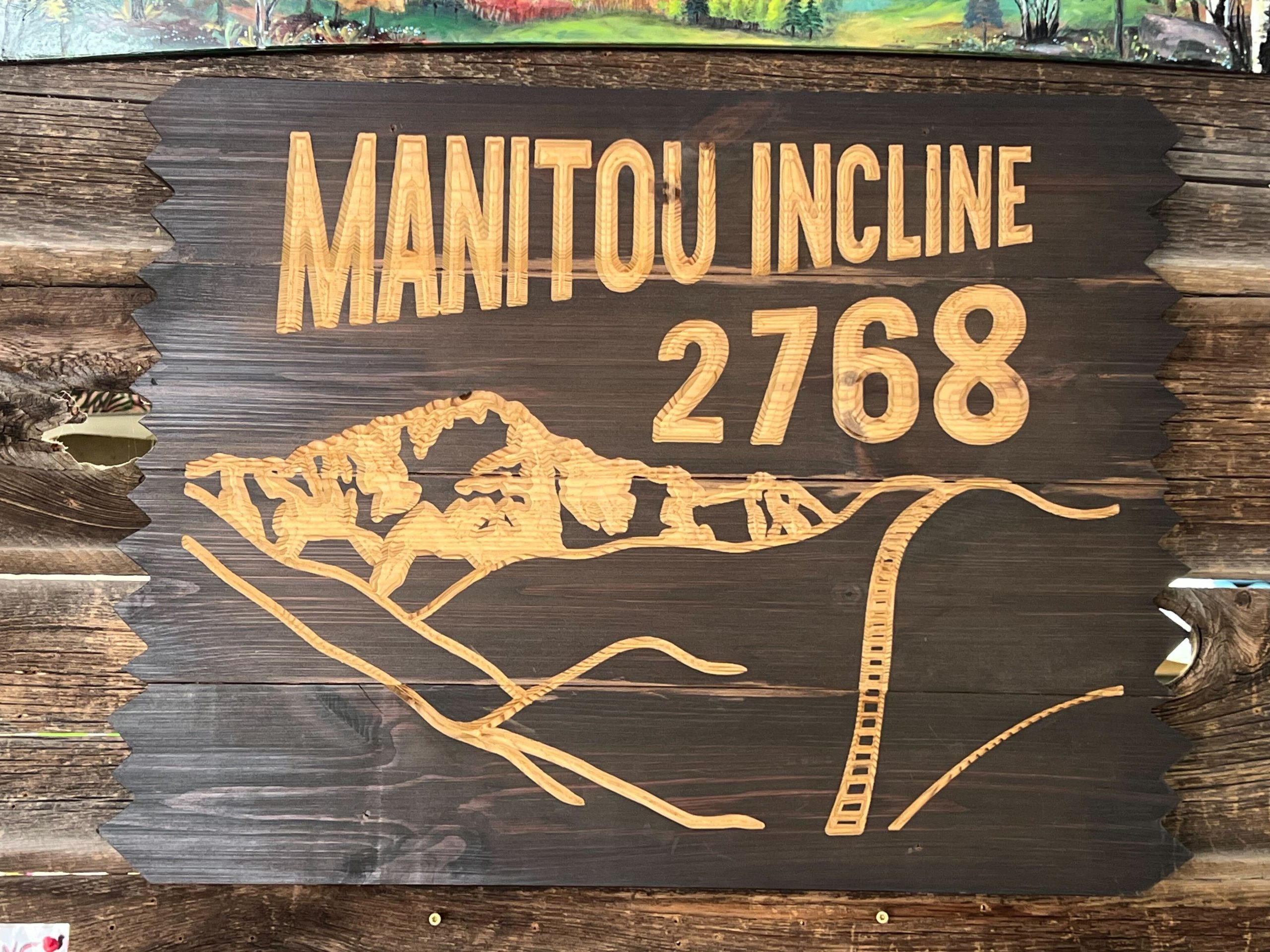
There is a specific kind of blank wall that shows up behind people on video calls, and most of us have one. Mine sat empty for two years, which is roughly how long it took to admit that a framed motivational quote was never going to happen. If you have been hunting for wall art for a home office that says something true about you instead of something printed on a coffee mug, the Manitou Incline piece Colorado Ski Chairs builds is worth a look. It is the 2,768 step monster outside Manitou Springs, cut into walnut stained wood, and it is one of the few things you can hang behind your desk that doubles as a receipt.
The Incline, for Anyone Who Has Only Heard the Stories
The Manitou Incline is an old cable car railbed on the side of Mount Manitou, just west of Colorado Springs. The cars are long gone. What is left is the ties, 2,768 of them, going almost straight up. You gain about 2,000 feet of elevation in a shade under a mile. There is a false summit near the top that has broken more spirits than any grade on the mountain, and there is a bail-out point at roughly the one third mark that locals talk about the way people talk about a DNF at a marathon.
People who live on the Front Range treat it as a benchmark. You do not hike it, exactly. You suffer it, on purpose, repeatedly, and then you tell people your time. Tourists do it once and limp for three days. Locals do it weekly and get weirdly competitive about sunrise laps. Either way, finishing it stays with you, which is the whole reason a carved wooden version of it ends up on somebody’s wall rather than in a drawer with the race bibs.
Colorado Ski Chairs is based in Manitou Springs, about a mile from the base of the steps. That proximity is not a marketing line, it is just where the shop is. The people building this piece drive past the trailhead parking mess every weekend and know exactly which switchback on the Barr Trail descent everybody hates. When a shop makes a landmark piece from inside the landmark’s own zip code, the detail tends to be right.
Why a Home Office Is the Right Wall for This One
Here is the argument for hanging it where you work. Most wall art for a home office is decoration, and decoration is fine, but it does not do anything. A carved Incline sign does something. It sits in your eyeline on the days the work is grinding, and it is a plain visual reminder that you have already done a harder, dumber, steeper thing than whatever is in your inbox. That is not a motivational poster. A poster tells you to persist. This thing just reminds you that you already did.
There is also the video call angle, and I say this with a straight face. Everyone has spent the last several years staring at each other’s backgrounds, and a lot of them are bare drywall, a bookshelf staged with books nobody read, or a plant that is clearly plastic. A carved walnut stained piece reads well on camera. The natural wood graphic against the darker stained field has real contrast, so it does not turn into a muddy brown rectangle the way a photograph behind glass does. It also starts conversations with anyone who recognizes it, and in Colorado that is a lot of people.
Then there is the honest reason, which is that a home office is the one room where you get to pick everything. The living room is a negotiation. The kitchen has opinions attached to it. Your office is yours. Hanging wall art for a home office that reflects a thing you actually did, rather than a thing you are supposed to aspire to, is one of the small pleasures of having your own room with a door.
What It Is Made Of, and Why Kiln Dried Wood Matters Here
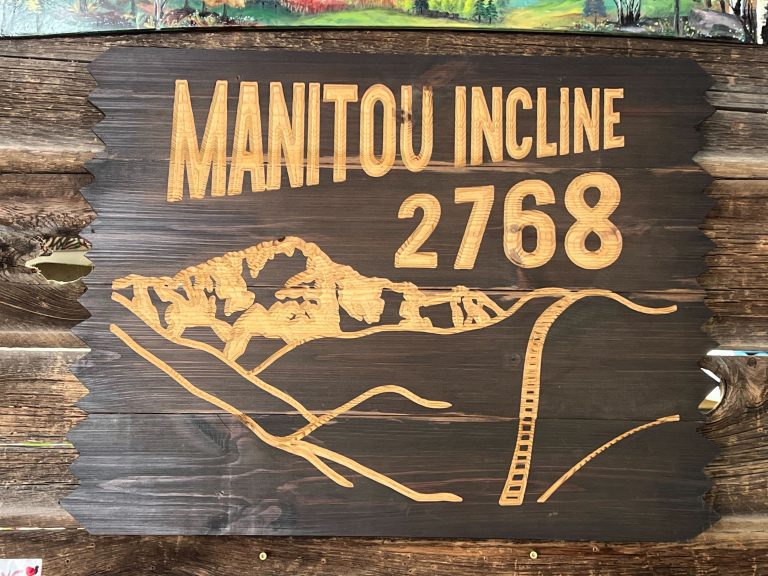
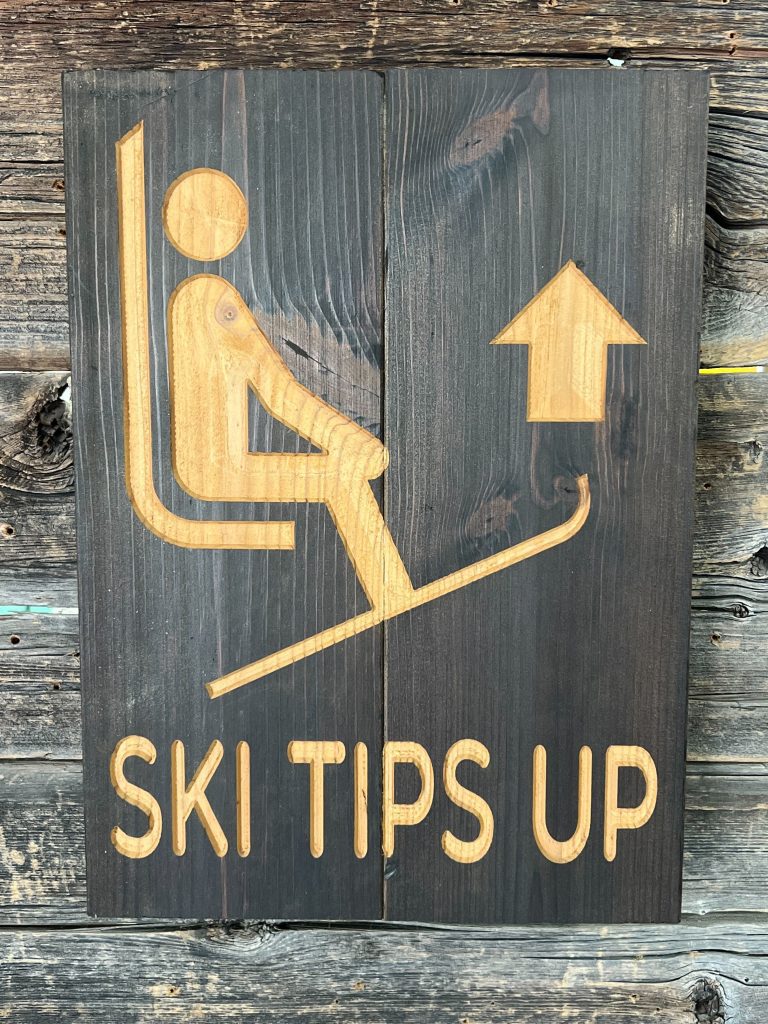
The Manitou Incline Walnut Stained Thermory Wood Wall Art is CNC cut from kiln dried Thermory wood, stained in a deep walnut tone, and sealed. The mountain profile and the step ladder running up its face are cut into the material, and the lettering reads as bare natural wood against the stained background. Nothing is painted on top of anything. That matters more than it sounds, because paint sitting on a surface is the first thing to go when a piece lives anywhere near weather. A cut graphic is part of the wood.
Thermory wood is thermally modified, which is a slightly fussy way of saying it has been heat treated to pull moisture and sugars out of the cell structure. The practical result is wood that moves less with humidity swings and is far less interesting to rot and insects, without a chemical treatment doing the work. It is the same reasoning behind using it on exterior decking. For a wall piece, it means the sign is not going to warp into a potato chip if it hangs on a covered porch through a Colorado summer where it is 92 degrees and bone dry at noon and then hailing by four.
One note on materials, and it is worth being straight about it. The main product description says kiln dried Thermory wood. One bullet in the short description says kiln dried pine. Those are not the same thing, and rather than pick the one that sounds better, the honest answer is that the long description is the detailed one and if the exact species matters to you, call 303.775.7273 and ask before you order. The shop will tell you what is on the bench. That is a less tidy sentence than a spec sheet would give you, and it is also the truth.
Three Sizes, and How to Pick the One That Fits
The piece comes in three sizes, and the dimensions are specific rather than vague, which is useful when you are measuring a wall with a tape measure and a healthy amount of guessing.
- Small, 11 inches by 15 inches. This is the shelf and nook size. It fits above a light switch, on the narrow strip of wall beside a door, or leaning on a bookshelf without needing a hanger at all.
- Medium, 24 inches by 16 inches. The one most people want for a desk wall. Big enough to read from across the room and on camera, small enough that it is not competing with a monitor for attention.
- Large, 28 inches by 21 inches. This is a feature piece. It holds its own on an empty wall by itself, which is exactly what you want over a credenza, a bar back, or a stairwell landing.
Pricing starts at $129 and the piece ships free. If you are choosing wall art for a home office specifically, the medium is the safe pick nine times out of ten. Measure the clear space behind your chair, subtract a few inches on each side so it is not crowding the edges, and go from there. If the exact size options or the current price for a particular size matter to the decision, the product page carries them, and a phone call to 303.775.7273 is faster than guessing.
No dimension beyond those three is invented here, because the product data lists three and only three. If you need something outside that range for a specific wall, that is a custom conversation rather than a size you click, and the shop does those regularly.
No Skis Were Harmed in the Making of This Sign
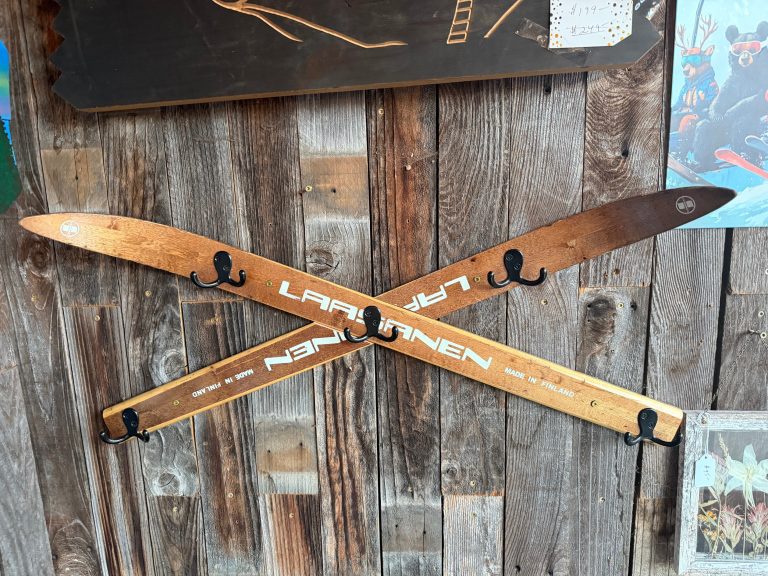
Worth clearing up, because most of what Colorado Ski Chairs builds is made out of retired gear and people reasonably assume everything is. This piece is not. It is cut from kiln dried wood. No skis, no snowboards, no hockey sticks, nothing salvaged off a mountain.
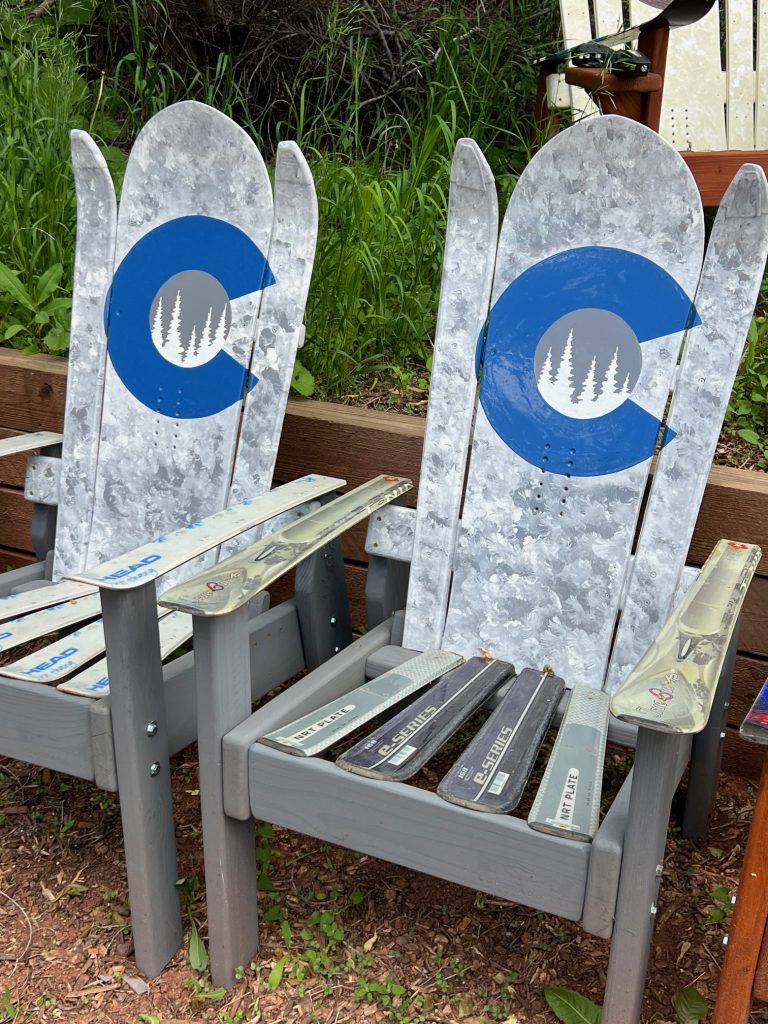
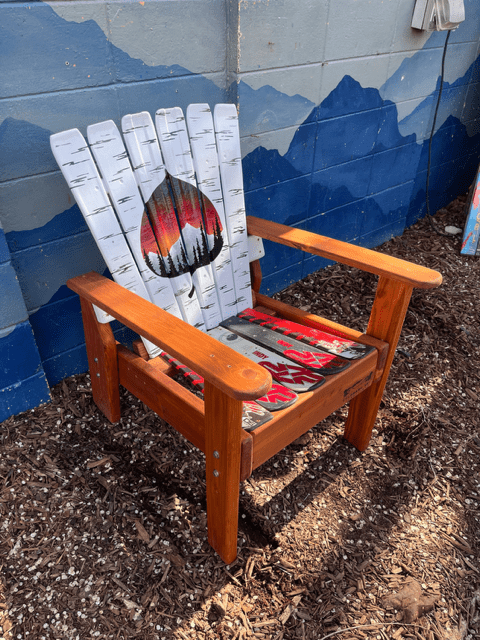
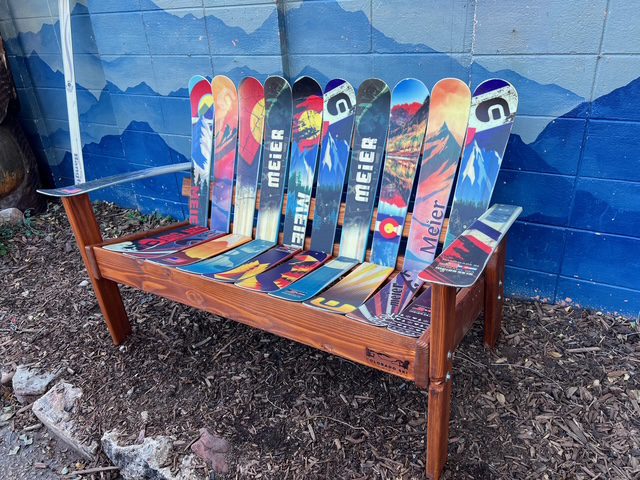
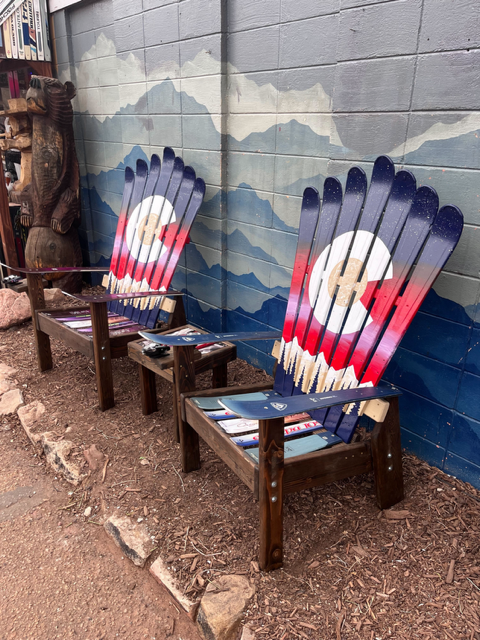
For context on why that is a real distinction: a single Adirondack ski chair from this shop takes four to five pairs of skis. A matched set of two takes eight to ten pairs. A snowboard chair needs at least three boards. A hockey stick chair runs twelve to fifteen sticks, and a golf club chair takes a full set, eleven or twelve clubs. Almost nobody has that much retired gear sitting in a garage, which is why the standard sentimental arrangement is that a customer sends the one or two pairs that actually mean something and the shop matches the rest from its own stock of vintage and retro skis, building the customer’s gear into the visible parts of the piece.
A carved wall sign takes none of that. Nobody has to donate anything, nobody is waiting on a shipment of their own skis to arrive in Manitou Springs, and there is no inventory-matching conversation. If you want the Incline on your wall and you have never owned a pair of skis in your life, that is completely fine. It also means this piece is the easy entry point into the catalog for people who like the idea of handmade Colorado work but are not ready to commit to a $600 chair.
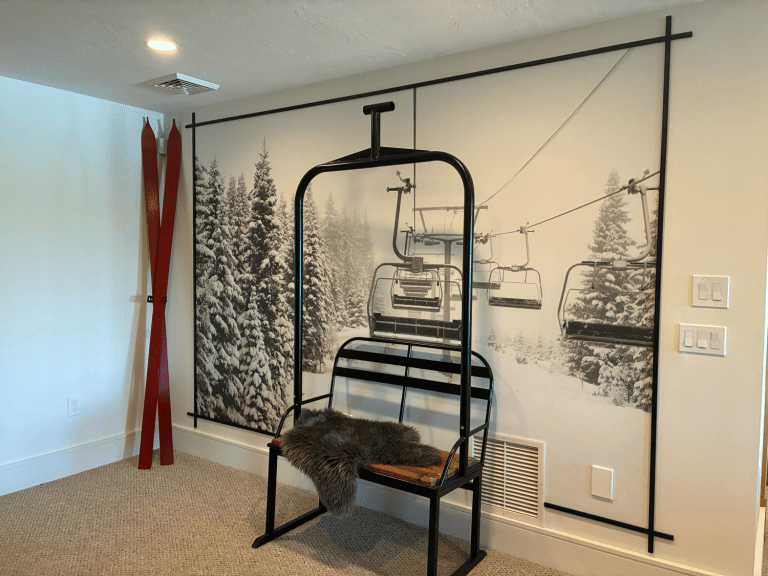
And while we are being precise: this is not a retired ski lift, and it is not a replica of one either. Colorado Ski Chairs sells both of those things. There are genuine retired chairlifts in the shop, like the three-person chair that actually rode up Loveland, and there are handcrafted welded steel replica chairlift benches built to order. This is neither. It is a carved wooden sign of a staircase on a mountain, and claiming anything else about it would be nonsense.
Where Else It Lands: Porches, Cabins, Gyms, and Rentals
The home office is the frame for this piece, but it is not the only room that works, and the outdoor rating opens up places most wall art cannot go.
On a covered porch or a patio it holds up, which is the entire point of the thermally modified wood and the sealer. Hot tub walls are a common spot, and that is a genuinely hostile environment for anything made of wood and paint. Here it is fine. Garages and home gyms are the other obvious one, and the gym case is nearly too on the nose: you are grinding out the last set of something while staring at a 2,768 step reminder that you have endured worse.
Mountain cabins and ski condos take it well, especially in a mudroom or along a stairwell where you have a narrow wall and no good options. Short term rentals are a real category for it too, since the piece sits in the shop’s Host Packages category. If you own a place in the Springs or anywhere on the Front Range, a carved local landmark is the kind of detail guests photograph, and it costs less than most of the generic prints people buy in bulk for rentals. Guests remember the specific thing. They do not remember the fourth beige mountain silhouette.
Home bars and game rooms round it out. The product listing itself makes a joke about the bathroom, which I will leave alone except to say the shop is clearly not precious about where it hangs. If you want to browse what else fits the same wall, the Wall Art and Indoor Decor and Furniture categories are where the rest of the carved and painted pieces live.
Customization, and an Honest Word About Logos
Personalization is available and it is the part people tend to care about most, because the Incline is a personal accomplishment and a date on it turns a sign into a record. Names, dates, finishing times, elevations, coordinates: all of that can be worked in. If somebody in your house finished their first lap on a specific morning in June, that date on the piece is the whole gift.
Hand painted scenes and lettering are done in exterior oils when a piece calls for paint. Custom artwork runs $75 per hour, so a small addition is a small number and a full custom scene is a conversation.
Now the logo rule, stated plainly because it trips people up. A company logo is never hand painted and never cut freehand. It goes on as a logo decal applied to the finished piece, which is the only way a mark holds its exact shape, proportion and brand color. Aluminum appliques and plastic appliques are the alternatives, each priced differently, and either can go front or back. If a designer on your side has spent years protecting the kerning on a wordmark, this is the answer they want to hear. Branded and bulk pricing is quoted on a call at 303.775.7273, not listed, because the price depends on the mark, the material and the quantity.
The Manitou Incline graphic itself is a public landmark, not a company logo, which is why cutting it is correct and not a contradiction of the rule above. A mountain and a set of steps belong to everybody. Your brand’s logotype does not, and it gets treated accordingly.
Care, Weather, and the Long Haul
Indoors there is effectively no maintenance. Dust it when you dust everything else, which for most of us means when somebody is coming over.
Outdoors it wants the same common sense any wood piece wants. Hang it where it is not getting a direct sprinkler hit twice a day. Under an eave or on a covered patio is ideal. In full exposure it will still hold, but like anything in the Colorado sun the stain will soften over a few seasons, and the piece will go a touch grayer and a touch more weathered. Some people hate that. Most people who buy reclaimed-looking wood think it improves, and a wall sign that has clearly lived outside for five years reads more honest than one that still looks like it came out of a box.
Hanging it is simple. The small size can lean on a shelf. The medium and large want a stud or a proper anchor, not a thumbtack and optimism. If you are putting it on a porch wall, stainless hardware is worth the extra two dollars so you do not get a rust streak running down the wood in year three.
The broader point about this shop is that it builds things meant to still be around later. Colorado Ski Chairs puts a three year hassle free warranty on its chairs and then handles repairs at materials cost after that. A wall sign has fewer failure modes than a chair, but it comes out of the same shop with the same attitude, which is that the thing should outlast your interest in it.
The Send-Off Gift Nobody Throws Away
This is the angle a lot of buyers actually arrive on. The Incline piece is a send-off gift, and it works where most send-off gifts fail badly.
Think about what normally gets handed over when somebody leaves. An engraved glass thing. A plaque with the company name bigger than the person’s name. A gift card, which is just money with extra steps and a worse feeling attached. None of it survives the move. The plaque goes in a box in the garage, and everybody involved knows it will, including the person handing it over.
A carved local landmark survives because it is not about the company. It is about the place and the person. If somebody spent twenty years on the Front Range and is retiring to Arizona or moving back to wherever they came from, a piece of the mountain they climbed on weekends goes up on a wall in the new house. If a colleague is leaving after a long run and the team wants to mark it, a date and a name cut into walnut stained wood lands differently than a certificate in a frame. And if the person being honored is a hiker, which on the Front Range is a fair bet, the Incline specifically is the one landmark they will have an opinion about.
The practical case helps too. It starts at $129 with free shipping, which clears most per-person gift thresholds without a procurement fight. It needs no sizing, no color choice, no shipping address guesswork beyond a street address. And when the retirement party is for a group, matched pieces for several people are easy, which is a different conversation than trying to source twelve identical anything on short notice. Bulk and branded orders go through the same phone number, 303.775.7273.
How Ordering Works
The standard version is straightforward. Pick your size on the product page, order it, and it ships free. The piece is in stock. There is no build queue to wait out for a standard size, which separates it from most of the catalog, where a chair or a bench runs two to four weeks in production because somebody is actually building it to order.
Custom work is the other path. Personalization, a nonstandard size, a logo decal or applique, a hand painted addition: those start with a call to 303.775.7273. The shop will tell you what is possible, what it costs, and how long it takes, and will send a look at the layout before anything gets cut. That last part matters with personalization, because a misspelled name cut into wood is permanent in a way that a typo in a proof is not.
Everything comes out of Manitou Springs and ships nationwide. If you are local to Colorado Springs or Denver, pickup and local delivery are on the table and worth asking about, mostly because it is genuinely fun to see the shop.
Frequently Asked Questions
Is this wall art made from old skis?
No. This piece is CNC cut from kiln dried wood and stained walnut. It takes no skis at all. Much of the Colorado Ski Chairs catalog is built from retired gear, and for reference an Adirondack ski chair from the shop takes four to five pairs of skis, but a carved wall sign takes none.
Can it hang outside?
Yes. It is cut from thermally modified kiln dried wood, stained and sealed for long term outdoor display, and it is a common choice for covered patios, porches and hot tub walls. Under an eave is the ideal spot. In full sun and weather the stain will soften over several seasons.
What sizes does the Manitou Incline wall art come in?
Three: small at 11 inches by 15 inches, medium at 24 inches by 16 inches, and large at 28 inches by 21 inches. Pricing starts at $129 with free shipping. For a desk wall in a home office, the medium is usually the right call.
Can a company logo be added to it?
Yes, but not as paint. A logo goes on as a decal applied to the finished piece so the mark keeps its exact shape and color, with aluminum or plastic appliques as alternatives, front or back. Branded and bulk pricing is quoted on a call at 303.775.7273.
One Last Thing
The reason this piece works as wall art for a home office is not that it matches your desk. It is that it is specific. It names a real set of steps on a real mountain, and if you have been up them, the sign is less decoration than evidence. If you have not been up them yet, it is a slightly obnoxious daily invitation, which is also fine.
Take a look at the Manitou Incline wall art and pick your size, or call 303.775.7273 if you want a name and a date cut into it. Either way, that wall behind your chair has been empty long enough.