The Wedding Gift for Skiers Who Already Own All the Gear
Somewhere in a garage in Colorado there is a snowboard leaning against the wall that has not touched snow in fifteen years, and its owner cannot really explain why he keeps it. That is the whole problem with shopping for a wedding gift for skiers, or for anybody who grew up on a hill: they already own the gear, they already own the gadgets, and they do not need a fourth cheese board. The Moose among the Aspens Snowboard Bench takes one real retired snowboard, runs a hand painted moose through a grove of aspens down the length of it, and turns the whole thing into something a couple will actually sit on for the next twenty years.
Why the Gift Registry Fails People Who Ski
Walk a registry for a couple in their thirties who met on a chairlift and you will find the same list everybody else has. Knife block. Stand mixer. Towels in a color nobody chose. All useful, all completely interchangeable, and none of it says a single thing about the two people involved. Meanwhile the couple has a storage unit with four pairs of skis, two boards, a pile of boots and one helmet with a cracked shell they keep for reasons they have never articulated out loud.
That is the gap a wedding gift for skiers has to cross. The problem is not that they need more stuff. The problem is that the stuff they love is retired, unusable, and sitting in a dark room where nobody sees it. A gift that makes the gear visible again solves something the registry cannot even see.
This is also why so many skier weddings end up with a group gift that goes sideways. Six friends pool money, buy a very nice something, and the couple is grateful in the careful way people are grateful when a gift is expensive and generic. A bench with a moose painted down a real snowboard is a different conversation. Guests ask about it. The couple tells the story. The gift keeps paying out for years instead of getting a thank you card and a shelf.
Colorado Ski Chairs builds this bench in Manitou Springs, one board at a time, and ships nationwide. It is listed at $495, down from $695, which puts a real piece of handmade furniture inside the range a few friends can go in on together without a spreadsheet. A wedding gift for skiers does not have to be clever. It has to be theirs.
One Board, One Bench, and Why a Chair Needs Three
Here is the part people get wrong, and it matters, so it goes up front. This bench is built around exactly one real retired snowboard. One. That is not a shortcut or a cost saving, it is just what the geometry wants: a snowboard is about five feet of stiff, slightly curved composite deck, which is almost exactly the span of a bench seat and almost exactly the footprint of a coffee table.
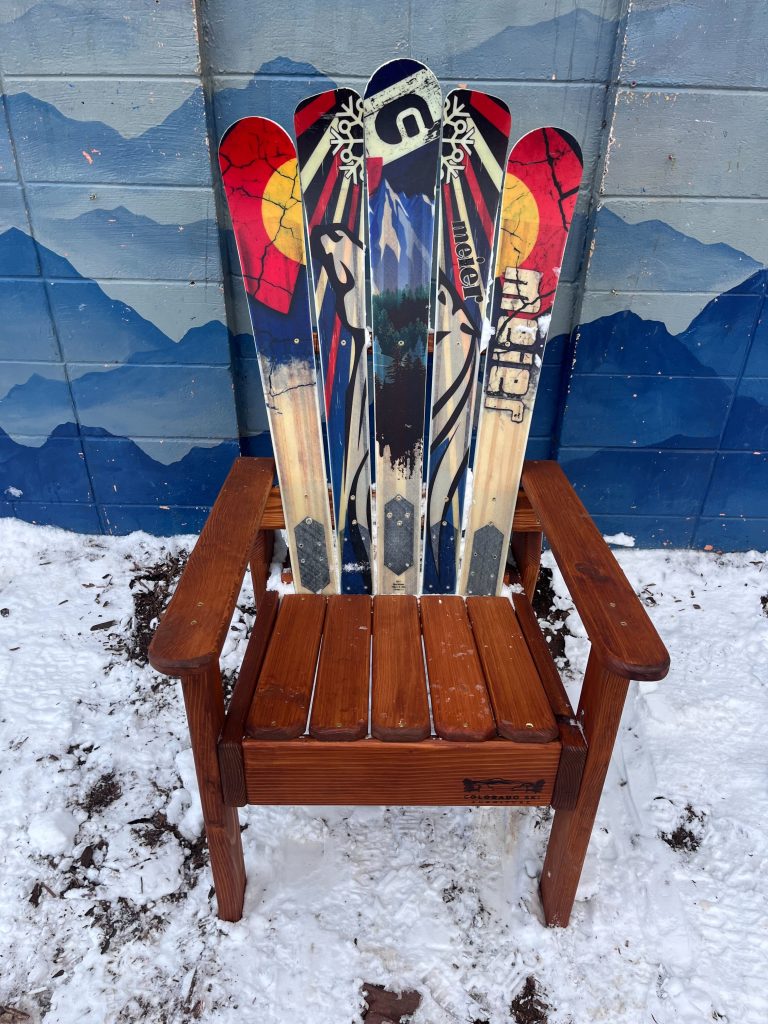
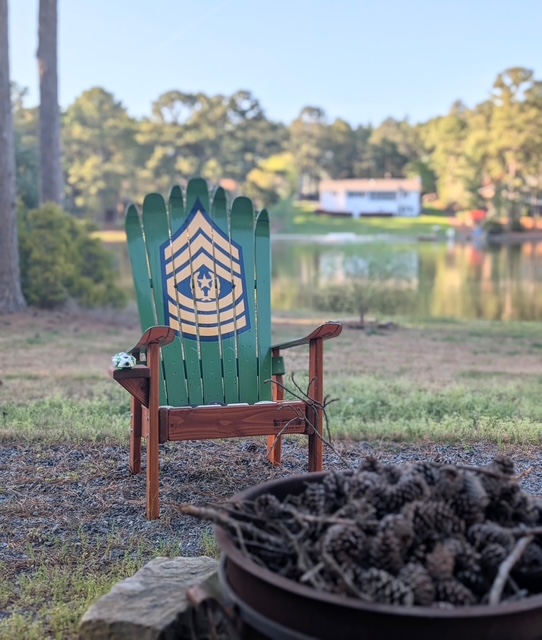
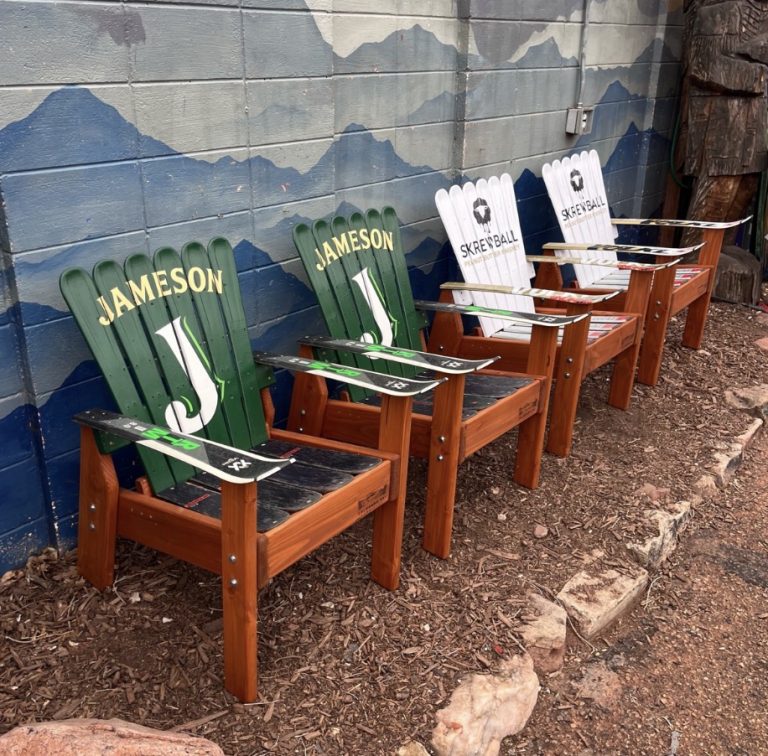
Chairs are a completely different animal. A snowboard chair takes at least three boards, because once you start cutting a deck into seat slats and a backrest you lose most of the length to the saw and to the curve. An Adirondack ski chair takes four to five pairs of skis, so a matched set of two chairs eats eight to ten pairs. A hockey stick chair runs twelve to fifteen sticks. A golf club chair takes a full set, eleven or twelve clubs. Almost nobody owns that much retired gear, which is why the shop’s standard Sentimental arrangement is that a customer sends the pairs that genuinely mean something and the shop matches the rest from its own stock of vintage and retro gear.
The bench is the exception to all of that, and it is the reason this piece works so well as a gift. Because it takes one board, a customer’s own board genuinely can become the entire piece. Not the visible part of it. The whole thing. If the couple still has the board one of them rode in college, that board can be the bench, and nothing has to be matched or faked. It is the cleanest sentimental build in the catalog.
And if the board is long gone, which it usually is, the shop builds from its own retired inventory and says so plainly. It will source a close match by brand and era if that matters to you, and it will call it a match rather than claiming it is the original. That distinction is the whole reason anybody trusts a piece like this.
The Moose, the Aspens, and Painting Vertical on Horizontal
An aspen grove is nothing but vertical lines. A snowboard deck is one long horizontal. Putting the first on the second is a composition problem before it is a painting problem, and the shop is upfront about that. The trunks march across the length of the board rather than crowding into the middle, the moose stands among them dark against the pale bark, and the black eyes in the aspen knots go in last, by hand, after everything else has settled.
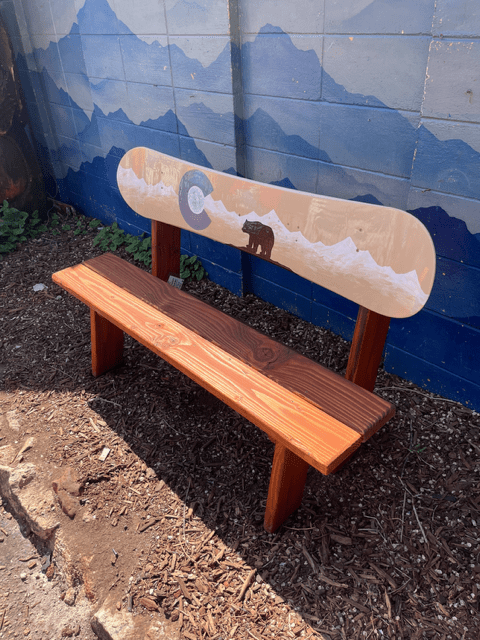
There is more on the board than the moose. Look at the one in the photo and you get a full Colorado scene: aspens with their leaves still on them scattered down the length, a line of snowcapped peaks running behind them, the moose walking in from the right, and a hand painted Colorado C sitting in the middle of it all. The state flag is fair game for a brush, by the way. It is a public symbol rather than a company mark, so it gets painted like any other part of the scene. A corporate logo is a different story, and that one comes up later.
That last detail tells you more about the piece than any spec line. The knots are the part a machine would get uniform and a person gets right. They are spaced the way knots actually fall on a real trunk, which is to say unevenly, and they are what makes the grove read as a grove instead of a pattern.
Every board the shop starts with came off a mountain with its own dings, its own graphics underneath and its own outline, so the grove never lands the same way twice. A knot that works beautifully over a gouge on one board has nowhere to go on the next. This is not a print run. It is one painter working with whatever that particular deck gives him, which means the bench your friends get will not be identical to the one in the photo, and that is the point rather than a disclaimer.
The paint goes on as hand brushed artwork in the shop’s usual exterior grade finish, the same approach used across its painted furniture. If the bench is headed for a covered porch or an entry that sees wet boots all winter, it is built for that. If it is going somewhere fully exposed to Colorado weather year round, call 303.775.7273 and ask, because the honest answer depends on the spot.
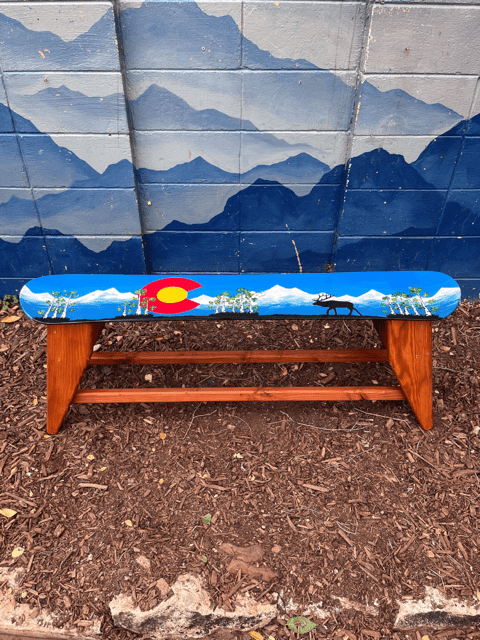
One retired snowboard, about 60 inches long, rated to 300 pounds, with the aspen knots painted in by hand last.
Sixty Inches That Holds Down Three Different Jobs
The bench runs roughly 60 inches long, 18 inches deep and 17 inches tall. Those three numbers are doing more work than they look like they are. Sixty inches seats two adults comfortably and three if everybody is friendly. Eighteen inches deep is enough surface for drinks, a couple of books, a laptop and a dinner plate at the same time, which is the actual test for a coffee table rather than the showroom test. Seventeen inches tall is bench height and also low table height, which is the whole trick.
It is rated to 300 pounds. That rating is not a technicality buried in a spec sheet, it is permission. Plenty of decorative furniture made from sporting goods looks like it would fold if you sat on it, and people treat it accordingly. This one is meant to take weight. Somebody is going to sit on it to pull their boots off every single winter day, and that is the design brief, not an edge case.
It is also light enough that one person can carry it out to the deck on a Friday and back inside on Monday. That portability is quietly the reason it ends up being the most used piece in a lot of houses. Furniture that is a project to move gets moved once and then stays wherever it landed. Furniture you can pick up follows the party.
Three jobs, then. Entry bench in winter, coffee table the rest of the year, side table between two chairs when the room gets rearranged for company. For a couple merging two apartments into one house, a piece that can be reassigned three times without looking out of place is worth more than a piece that only does one thing beautifully.
Where It Actually Lands in a Real House
The people who buy this bench tend to fall into three groups, and the shop knows all three by now.
First, people furnishing a mountain place who are tired of catalog consoles. They have the square footage and the view, and what they do not have is anything in the room that came from the mountains outside the window. A bench built on a board that rode a lift somewhere fixes that in one purchase, and it does not tip into theme park territory the way a whole room of ski decor can.
Second, homeowners with narrow entryways. This is the least glamorous use case and probably the most common. A standard entry bench is a chunk of furniture that eats a hallway. This one is 18 inches deep, takes boots underneath, holds weight, and gives you somewhere to put a bag down without blocking the door. It solves an annoying problem and happens to look like something.
Third, the gift buyers. Friends of a couple who met on a hill somewhere, buying a wedding gift for skiers who have been living together for four years and genuinely need nothing. Parents buying a housewarming present for a kid who just closed on a first place. People shopping an anniversary who have run out of ideas that are not jewelry or a trip.
There is a fourth group the shop sees less often but that works beautifully: short term rental owners. A bench in the entry of a cabin rental does two things at once. It gives guests a place to deal with boots, which every ski rental desperately needs, and it gives them something worth photographing, which is free marketing every single week. More low pieces for that kind of build live under benches and tables.
Making It Yours, and an Honest Word About Logos
Almost nothing about this piece is fixed. The colors are yours to choose, so if the palette needs to go warm instead of cool, or the aspens need to be fall gold instead of white and green, that is a normal request rather than a special project. The animal in the grove can change too. People ask for elk, bear, bighorn and the occasional dog, and the shop paints what you ask for. If you want a specific board brand under the paint, ask and the shop will tell you honestly whether it has one in stock.
Custom hand painted work on the shop’s benches generally runs around $75 per hour, so a small change to the scene is not a huge line item and a from scratch design is priced by what it actually takes. Call 303.775.7273 and describe what you want. You will get a real answer about time and cost rather than a form.
Now the part that trips up every business buyer, so it goes in plainly. A scene is hand painted. A logo is never hand painted. If a company wants its mark on a piece like this, that mark goes on as a logo decal floated onto the painted background, which is the only way it holds its exact shape, proportion and brand color. Aluminum appliques and plastic appliques are the alternatives, each priced differently, and they can go front or back. A painter can match a mountain. Nobody should be freehanding a trademark, and a shop that offers to do it is telling you something about how the job will come out.
Branded and bulk pricing is quoted on a call, not listed, because the number genuinely depends on the logo, the method, the quantity and the timeline. That is the one place the shop will not put a price on a page.
Not a Chairlift, Not a Replica, Just a Board That Rode a Mountain
Colorado Ski Chairs sells three very different kinds of things that people lump together, and it is worth being clear about which one this is.
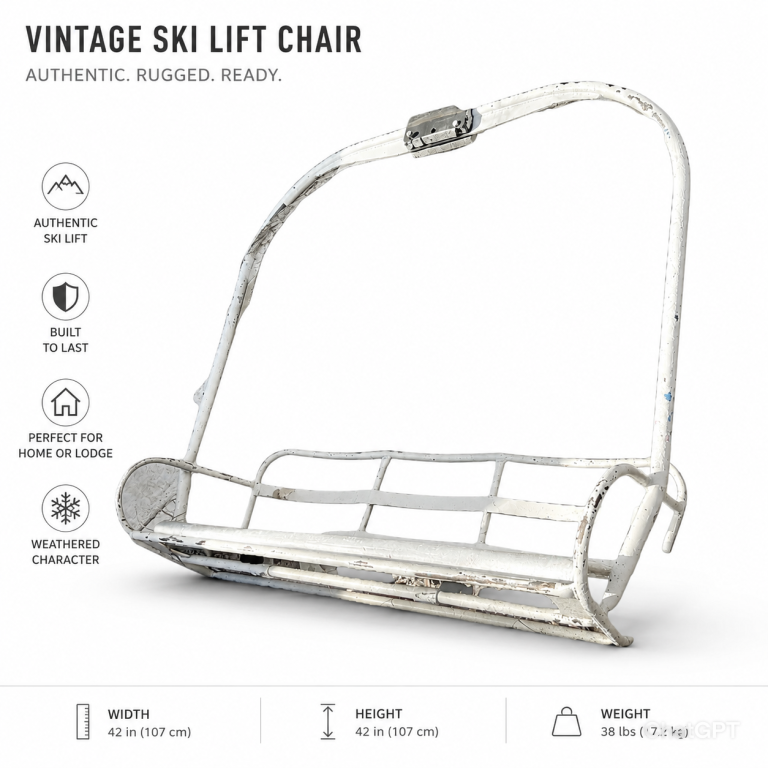
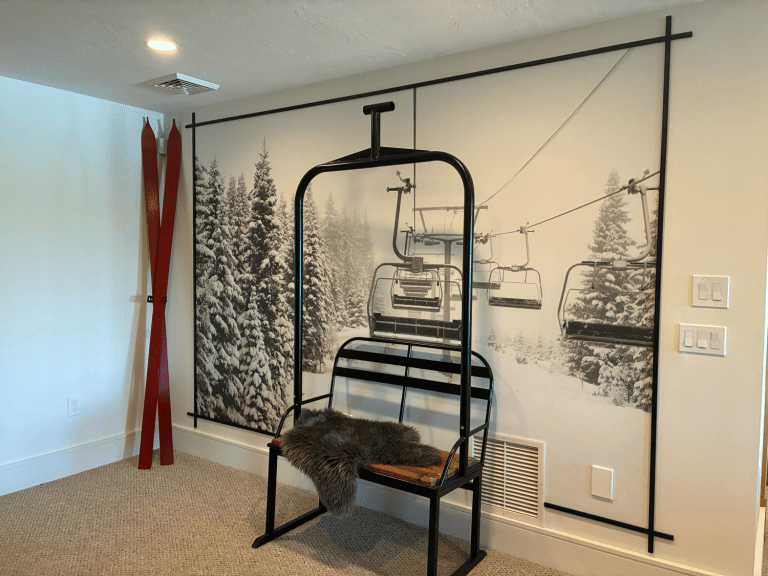
There are genuine retired chairlifts. Actual lifts that carried actual skiers, pulled off a mountain, refurbished and set on a welded stand. The shop has had a real three person chair from Loveland Ski Resort, and when it says real, it means the thing itself, not a tribute to it.
There are handcrafted replica chairlift benches. Those are new welded steel recreations built to order in Colorado, powder coated in whatever color you want, with a wrap around safety bar and a stained wood seat. They look like a lift because they were built to, not because they came off one. Anybody who tells you a replica was rescued from a mountain is making that up.
And then there is this bench, which is neither. It is a real retired snowboard, a deck that genuinely saw a season or ten, with a hand painted mural on it and a wood frame underneath. Nobody at the shop knows which mountain it rode, and nobody is going to invent one for you. What is true is that the board is real, it is retired, and it would otherwise be a five foot piece of composite waiting out the next few centuries in a landfill.
That honest middle category is where most of the catalog lives, and it is why the shop is specific in its product names. If a piece is a replica, the name says replica. If a lift is original, the name says original. You should never have to call and ask which one you are buying, and with a wedding gift for skiers in particular, the story you tell the couple needs to be the true one.
Living With It Through Four Colorado Seasons
A piece like this gets used hard in winter and then forgotten in July, so here is what that actually looks like.
Winter is the hard season, and the bench is built for the specific abuse of it. Wet boots go underneath. Somebody sits down soaked in melting snow. A glove full of ice water gets set on the surface and nobody notices for an hour. A painted hand finished surface handles that fine, and a quick wipe is the whole maintenance routine. The thing to avoid is leaving standing water pooled on it for days, which is true of any painted furniture and not a flaw specific to this one.
Spring and fall are when it moves. This is when the portability earns its keep: out to the deck for a weekend when the weather turns nice, back inside when it does not. Colorado weather in April makes that decision for you about twice a week.
Summer it mostly lives as a coffee table, which is the least demanding job it has. Drinks, feet, a dog that has decided it is a dog bed now. Direct all day sun will slowly take the edge off any painted finish over the course of years, so if the piece is going to live in full exposure permanently, mention that on the call and the shop will tell you what it recommends.
The long view on a piece like this is that it ages rather than wears out. Hand painted furniture built on a real board picks up a mark here and there, and it looks better for it, because the board already had a life before this one. A knife block does not improve with age. This does.
How to Buy It as a Gift Without Ruining the Surprise
A few practical notes, because gift timing is where good intentions go to die.
The bench at $495 is made to order, one board at a time, so it is not a next day purchase. Painted work takes real studio time. If the wedding is in three weeks, call 303.775.7273 before you order and ask what is realistic, because the shop would rather tell you the truth than miss a date. If the wedding is two months out, you are fine.
For a group gift, the simplest path is one person orders and everybody pays that person. Trying to split a custom order across six credit cards is how a gift turns into a group chat nobody enjoys.
If you want the couple’s own board in it, that conversation has to happen before anything gets cut. Ask them for the board, or ask a sibling who knows where it is. The shop will want photos first and will tell you honestly whether that particular deck is usable, because some boards are too delaminated to build on and a straight answer up front is better than a surprise later.
And if you want it to stay a surprise, order it in your own name and have it shipped to you. It is light enough to move and it will survive a few weeks in a garage, which is fitting, since a garage is where the board started.
Frequently Asked Questions
How many snowboards does it take to make a bench?
One. A single real retired snowboard makes a bench or a coffee table. A snowboard chair is different and takes at least three boards, and an Adirondack ski chair takes four to five pairs of skis, so a matched set of two chairs takes eight to ten pairs.
Can I send in a snowboard that means something to us?
Yes, and because a bench takes exactly one board, your board can be the entire piece rather than part of it. Send photos first so Colorado Ski Chairs can confirm the deck is sound enough to build on. If the original board is gone, the shop builds from its own retired stock and will source a close match by brand and era rather than claiming a stand in is the original.
Is this a piece of a real chairlift?
No. It is a real retired snowboard with a hand painted moose and aspen mural, on a wood frame. Colorado Ski Chairs does sell genuine retired chairlifts and separately sells handcrafted welded steel replica chairlift benches, and the product name always tells you which is which.
Can we change the animal or the colors?
Yes. Colors are chosen at order, the animal in the grove can be swapped for an elk, a bear or something else entirely, and specific board brands can be requested if the shop has one on hand. Custom painting generally runs about $75 per hour. Call 303.775.7273 to talk it through.
Is it strong enough to actually sit on?
Yes. It is rated to 300 pounds, which is the difference between a decorative object and furniture. Sitting on it to pull boots off is the expected daily use, not a risk.
One Board, One Bench, One Good Story
A wedding gift for skiers works when it makes the thing they already love visible again. One retired snowboard, a moose standing in a grove of aspens, the knots painted in last by hand, and sixty inches of furniture that gets sat on every winter morning for the next couple of decades. See the Moose among the Aspens Snowboard Bench, or call 303.775.7273 and ask about putting their own board in it. Worst case you find out it is too far gone, which is still a better story than a cheese board.