Winter Outdoor Furniture: How to Keep Your Patio Usable
It is twenty six degrees on a Tuesday morning in Manitou Springs and there are four inches of fresh sitting on the deck rail. The chairs are still out there under it, exactly where they were in July. Somebody will brush one off around four o’clock, drag the fire pit over, and sit outside until the light goes. That is the whole trick, and it is less complicated than the internet wants you to believe.
The Cold Is Not What Kills Patio Furniture
Everybody blames winter. Winter is mostly innocent. What actually destroys outdoor furniture is water getting into a place it can freeze, expanding, and then doing it again the next night. Fifty freeze thaw cycles in a Colorado February will pop a joint apart that a hundred degree August afternoon never touched. The cold is just the delivery mechanism.
The second killer is sun. High altitude ultraviolet light chews through finishes faster than anybody expects, and it does not take the winter off. A south facing deck at 6,500 feet gets blasted in January the same way it does in June, only now the snow underneath is bouncing a second helping of it back up at the underside of your armrests. If your furniture looks chalky and faded on top and fine underneath, that is sun, not frost.
The third is dumb mechanical stuff. A chair that spends the winter with one leg in a puddle that refreezes every night will wick moisture up the grain and rot from the bottom. A table that catches a two foot snow load off a metal roof takes a hit no material handles gracefully. Neither of those is a weather problem. Both are a placement problem, and placement is free to fix.
So when somebody tells you to haul everything into the garage every October, ask what they are actually protecting against. If the answer is standing water, ice, and sun, there are cheaper answers than losing your patio for five months of the year. Most of them take an afternoon.
What Actually Holds Up Outside All Winter
Material matters more than maintenance. A piece built out of the right stuff and finished properly needs almost nothing from you. A piece built cheap needs constant attention and dies anyway.
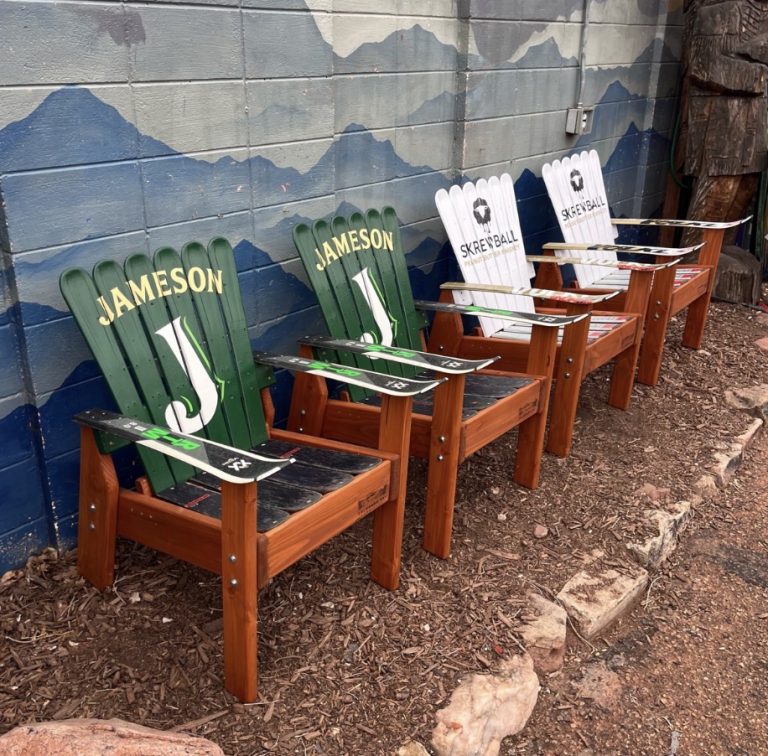
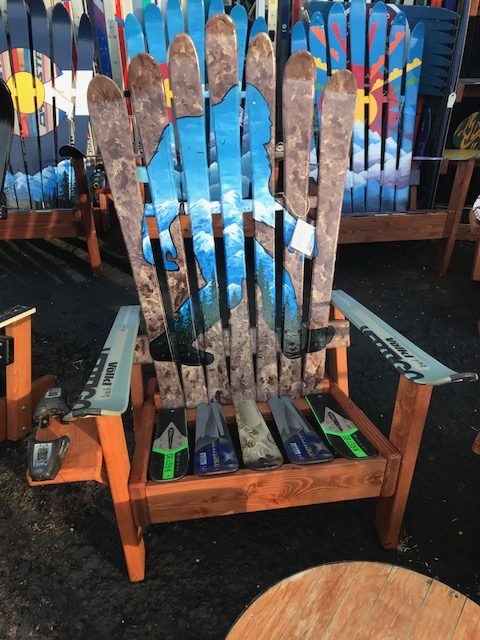
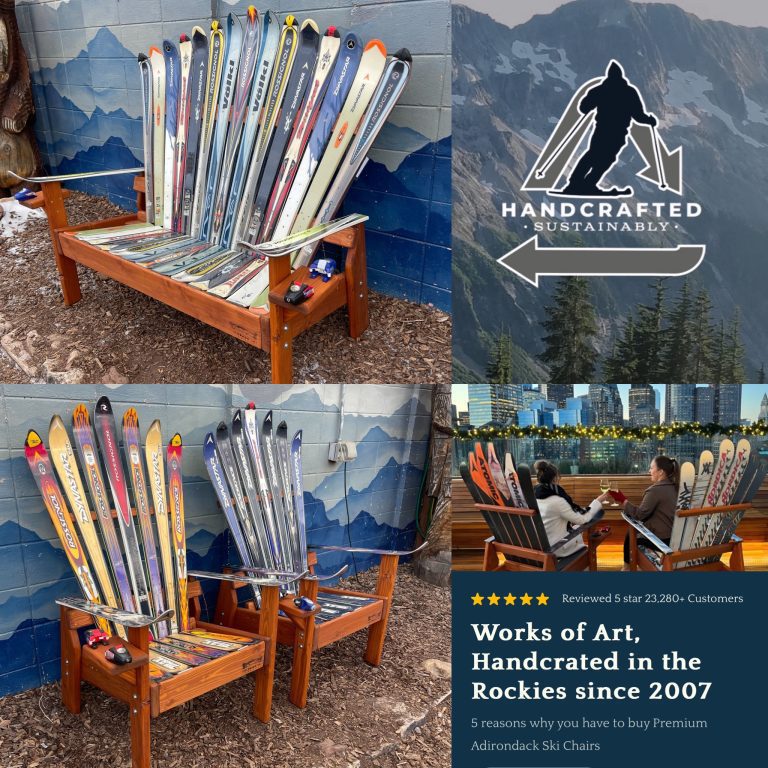
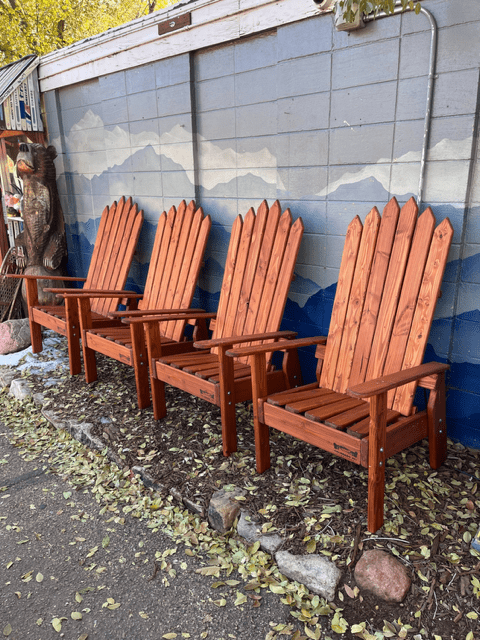
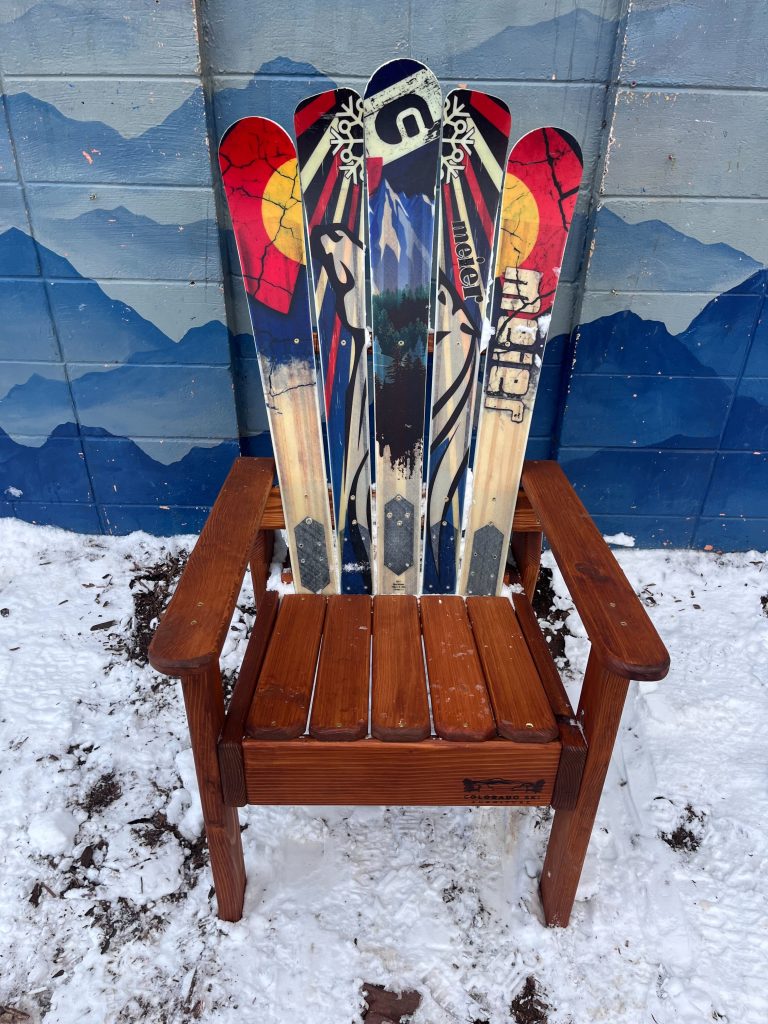
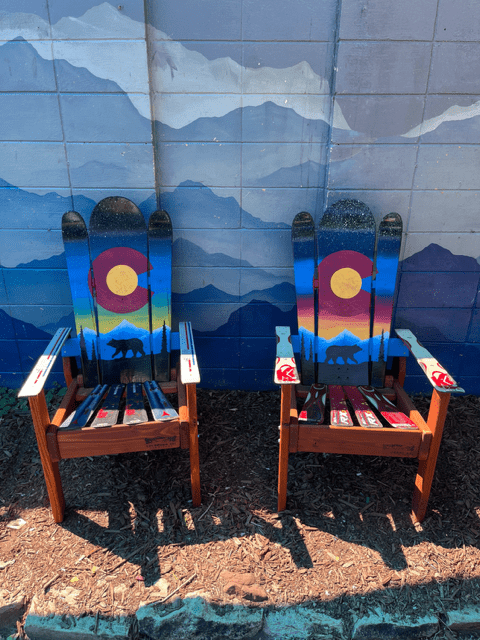
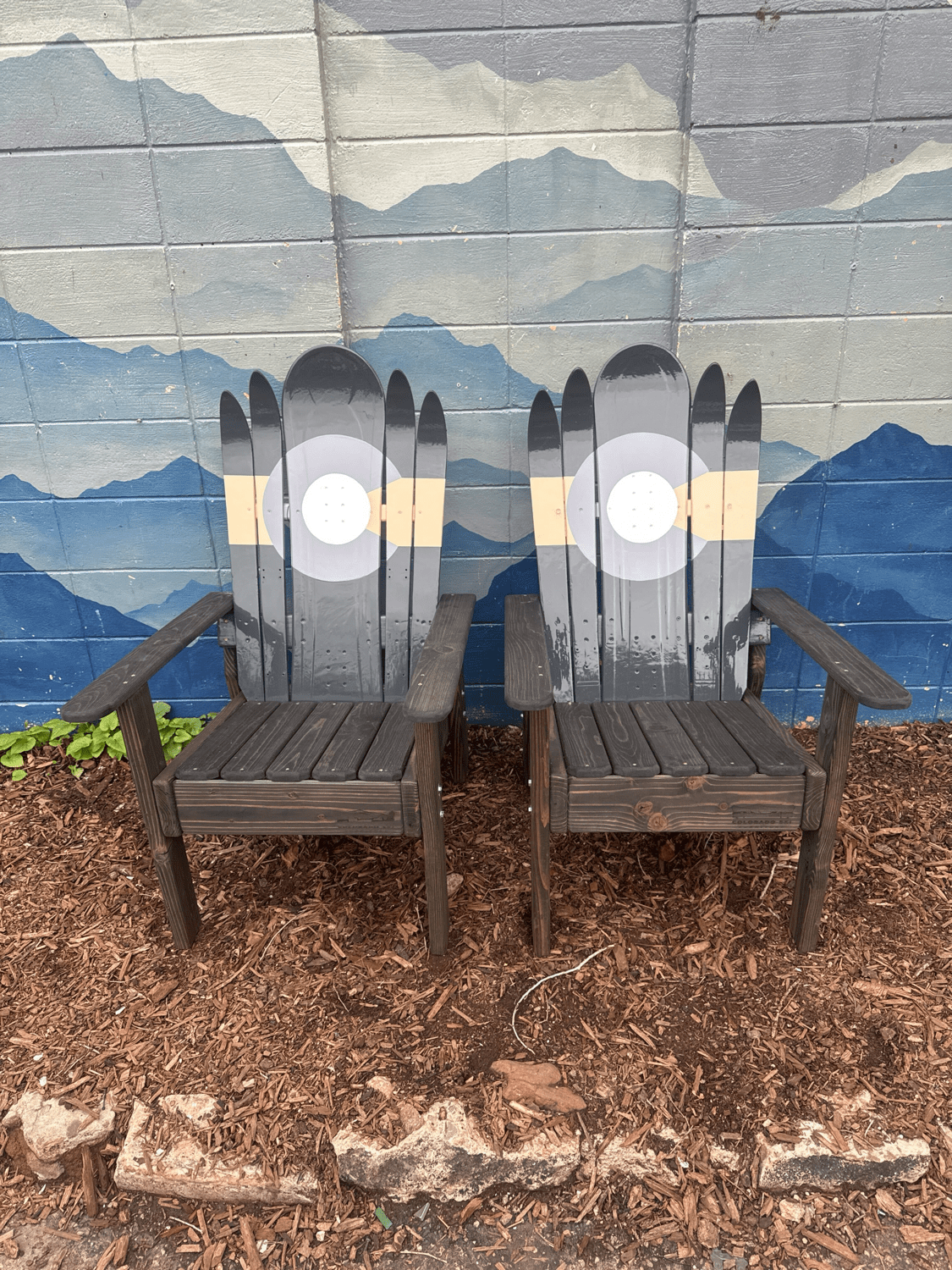
Our chair bases are Douglas Fir, which is not glamorous and does not photograph like teak, but it is stable, strong, and it does not mind getting wet and drying out over and over. Then the whole thing gets hand painted in exterior oils. Not stain, not a water based topcoat that flakes in two seasons. Exterior oil paint soaks in, stays flexible through temperature swings, and is genuinely weatherproof. The 400 lb weight capacity does not drop because it snowed.
The skis are the part people worry about, and they are the part you should worry about least. A retired downhill ski is a laminated sandwich of fiberglass, metal edges, and P-Tex engineered specifically to be dragged through wet snow at speed for a decade. Ten years on a lift line, then twenty years on your deck. That is an easy retirement.
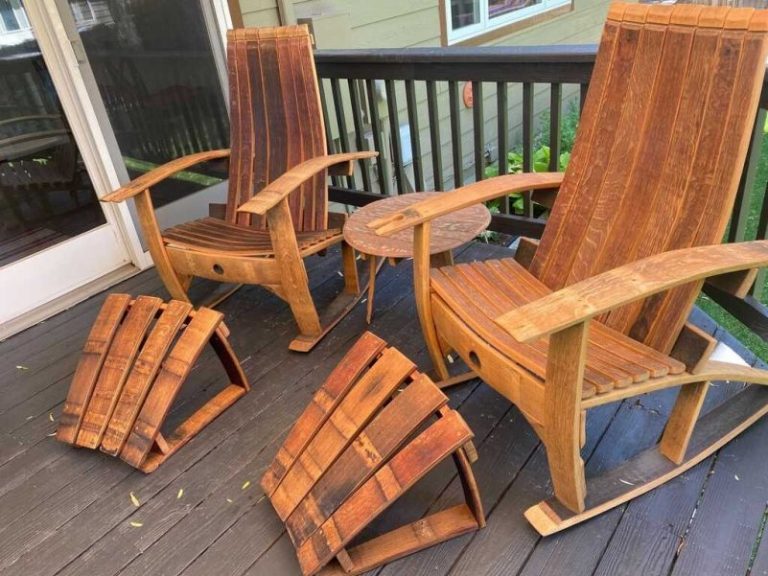
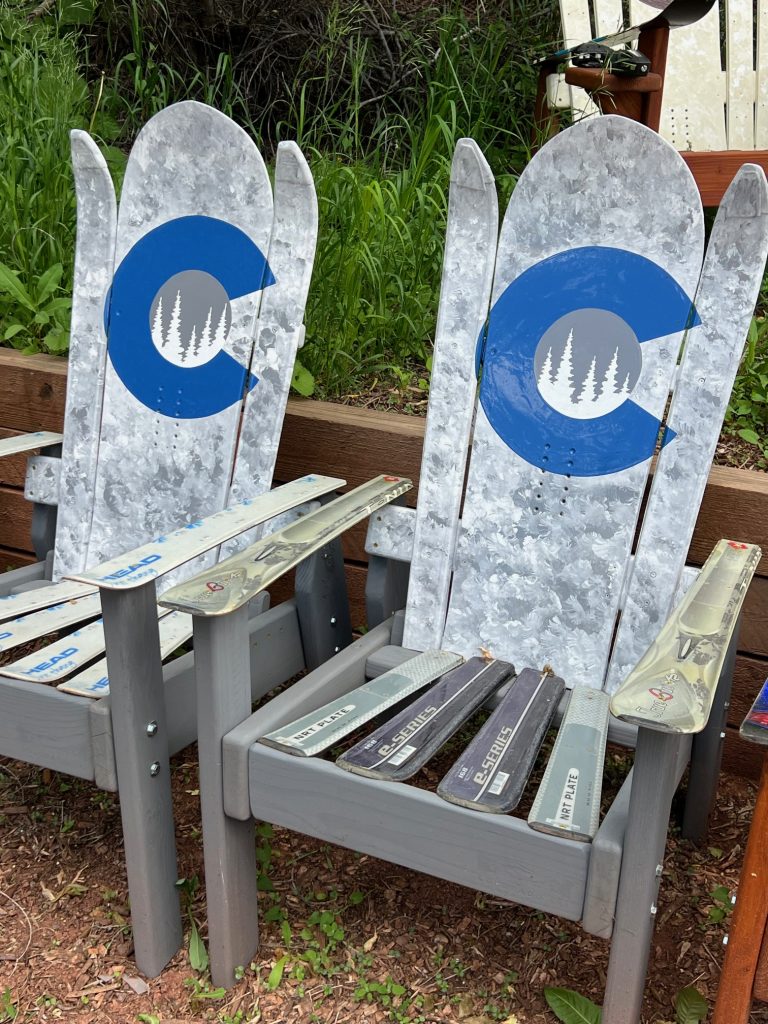
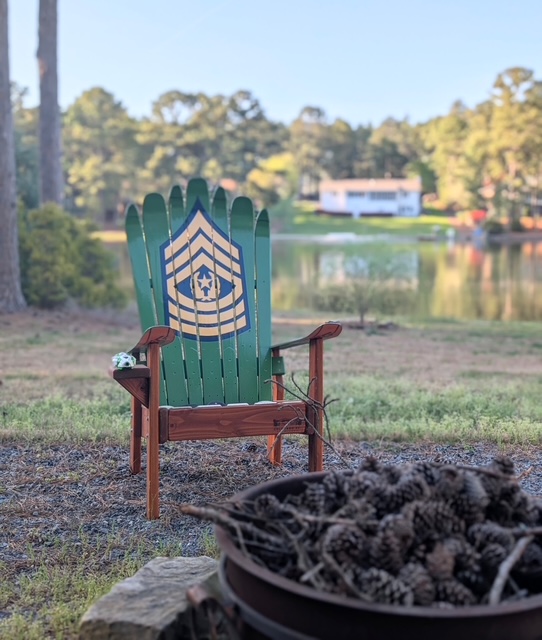
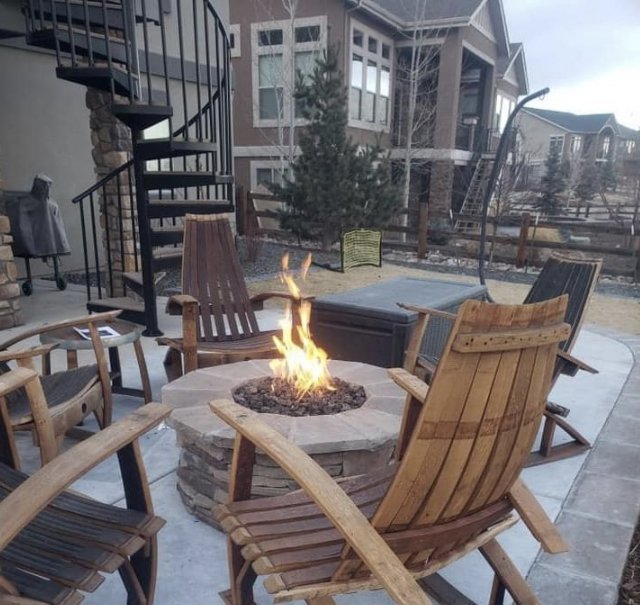
Our barrel chairs use reclaimed oak whiskey and wine staves, which held liquid under pressure for years before they got anywhere near a bandsaw. Oak that tight does not care about a snowstorm. If you convert a chair to a rocker, that is $75 more and the rockers are cut from repurposed oak wine barrel slats, so the part touching the ground is the most water resistant piece on the whole chair. That was not an accident. If you want to see one already built that way, the Blue CO Flag Alpine Rocker with a grey base is $595 and it is what people order for a porch they actually sit on in February.
Aluminum, teak, and resin wicker all survive winter fine too, for whatever that is worth. They also all look like they came from the same catalog as everybody else’s. Small opinion: if a chair is going to sit outside in the snow for four months where the neighbors can see it, it may as well be interesting.
Sealants, Covers, and the Honest Version of Winter Prep
Here is the short list that actually does something, in order of how much it matters.
Get the legs off standing water. Two inches of pea gravel, a paver, a strip of composite decking, anything that keeps the feet out of the puddle that forms every time the sun melts the snow at noon and refreezes it at five. This is the single highest value thing you can do and it costs about eleven dollars.
Knock the snow off after a big storm. Not every flake, and not every day. Just do not let two feet sit and compact into ice on a horizontal surface for six weeks. A push broom, three minutes, done. The snow itself is actually insulating and largely harmless. It is the ice layer at the bottom, sitting against the finish, that does the work.
Skip the shrink wrap covers. Everybody buys them and half of them make things worse. A cover that does not breathe traps condensation against the wood and creates a little terrarium of moisture that sits there all winter at 34 degrees. If you cover something, use a breathable cover, leave the bottom open, and check it in January. If the inside is damp, the cover is the problem.
Do not sand and reseal in the middle of winter. Finishes need temperature to cure. Anything you brush on at 30 degrees will sit there and sulk. Note the spots that need touching up, take a photo so you remember, and handle it in May when it is 65 and dry. Furniture is patient.
Bring in anything with fabric or foam in it. That part of the conventional advice is correct and always has been.
One more that gets skipped. Check the hardware in the fall, not the spring. Wood moves with humidity, and a bolt that was snug in August is often a quarter turn loose by Halloween. Tightening it before the freeze thaw season starts means the joint never gets a chance to work itself open all winter. Ten minutes with a socket wrench in October is worth an hour of repair in April, and it is the only piece of scheduled maintenance we actually recommend.

Build the Whole Setup Around a Heat Source
Nobody sits outside in January because the chairs are nice. They sit outside because there is a fire and somebody brought a bottle of something. The furniture is infrastructure for the fire, not the other way around, and once you accept that the layout gets obvious.
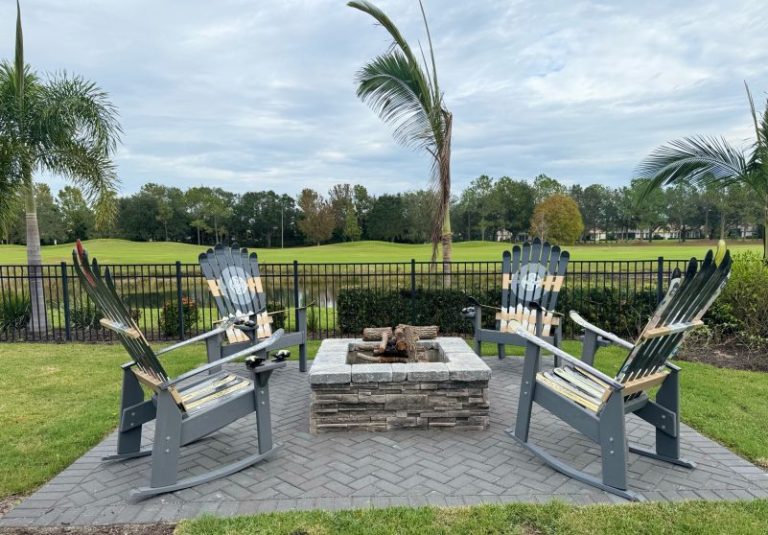
Pull everything in tighter than it sits in summer. A summer patio wants space and airflow. A winter patio wants a huddle. Four feet from the fire is the sweet spot for most propane and wood setups, close enough to feel it on your shins, far enough that nobody’s jacket sleeve gets a hole in it. Measure it once with a tape instead of guessing and you will be surprised how far apart you had things.
Face the seats inward, not out at the view. This is counterintuitive on a property with a good view and it is still correct. In summer people look out. In winter people look at each other and at the flames, because that is where the warmth is and that is where the conversation is. The view is still there when somebody stands up.
Our Customizable Fire Pit Starter Set exists because this is the arrangement people kept building on their own. Two ski chairs and a ski bench, which seats four or five comfortably in a tight arc and leaves an open side so nobody has to climb over anybody to get more wood. You pick the colors you want and, just as usefully, tell us the colors you do not want.
One more thing. Put a small table in the huddle. There is nowhere to set a drink on a snowbank, and a mug in the snow is a cold mug in ninety seconds. A side table or a low bench does more for a winter patio than another chair does. The whiskey barrel side table at $299 is the cheap fix, cut from the same reclaimed oak staves as the barrel chairs, and there are ski top and snowboard versions of the same idea in the tables category.
Snow Load, Ice Melt, and Where You Park Things
Look up before you decide where anything goes. Metal roofs shed in slabs, and a slab of wet spring snow off a second story eave carries real weight. It will crack a tabletop and it will absolutely take out anything with glass in it. Walk the perimeter of the house on a melting day in March and note where the piles are. That is your no parking zone, permanently.
Gutters and downspouts are the other one. A downspout that discharges near a chair leg is building an ice column under that leg all winter. Move the chair or extend the downspout. Either is a ten minute job and both beat replacing furniture.
Ice melt is worth a paragraph because the wrong kind is genuinely corrosive. Calcium chloride and magnesium chloride do a number on metal hardware and on some finishes if it gets tracked around and sits there wet. If you salt a walkway that runs past your furniture, sweep the residue off in the spring rather than letting it sit in the joints. Sand and traction grit do not have this problem at all, and they work fine on a deck where you are not trying to get to bare concrete.
If you have a covered porch, use it, but understand what you are getting. Covered means less snow and less direct sun, which is real. It usually also means less air movement, so things dry slower after a storm blows sideways under the roof. Covered is better. It is not a garage.
The best winter spot on most properties is a corner that gets a couple hours of afternoon sun and has some wind protection from the house itself. Sun dries things. Wind chills people. Find the place with the first and not the second and put the chairs there.
The Soft Stuff: Cushions, Blankets, and Throw Pillows
Foam cushions are the one category where the traditional advice holds up completely. Bring them in. Foam absorbs water, water freezes, ice tears the cell structure apart from the inside, and the cushion comes out of winter feeling like a bag of gravel. There is no cover good enough to beat this. A deck box helps but a dry garage is better.
Wool blankets, though, are the actual answer for winter seating, and they are better than cushions ever were. Wool holds warmth when it is damp, which cotton does not and fleece really does not. Keep three or four in a lidded bin by the back door, hand them out as people come outside, and shake them off and put them back at the end of the night. Nobody has ever complained about being handed a wool blanket.
A sheepskin or a wool pad on the seat is worth more than an inch of foam in the cold, because the problem in winter is not softness, it is conduction. A painted wood seat at 25 degrees pulls heat out of you fast. Anything with loft between you and the wood stops that. Our chairs are contoured enough that most people do not want a cushion in summer anyway, and in winter you want the insulation more than the padding.
Skip outdoor rugs in the snow. They freeze to the deck, they hold moisture against the boards underneath, and in April you will find a perfect rectangle of ruined finish. Rugs are a summer play.
Lighting is part of the soft stuff too, because in December it is dark at 4:45 and nobody sits in a black yard. String lights on a wire, or a couple of solar lanterns on the rail, is enough. You are not lighting a parking lot. You want just enough that people can find the chairs and see each other’s faces, and the fire does the rest. Warm white, not the blue white stuff, unless you are going for a look that says emergency room.
Little detail that pays off: a hook or a peg somewhere out there for wet gloves and hats. Every winter patio ends up with a pile of damp gloves on a chair arm. Give them somewhere to go.
Buying Once Instead of Every Third Spring
Here is the calculation nobody runs. A set of big box patio chairs costs a couple hundred dollars, lasts three or four winters, and gets replaced. Do that for fifteen years and you have bought four sets, hauled three of them to the dump, and never once had a chair you actually liked.
The alternative is buying something built to stay outside and then leaving it outside. Everything in our ski chair collection is made to order in two to four weeks, hand painted in exterior oils, and carries a 3 year hassle free warranty. Yup. Hassle free means you call, we fix it, nobody asks you to photograph a receipt from four years ago.
The standard Adirondack sits about 45 inches tall, 36 inches deep, and 32 inches wide, with a 55 inch tall version if you want more back and more presence. Comfortable for anybody from about three feet to six feet ten, which covers grandkids and the tall nephew in the same set. There is a ski binding cup holder built into the arm, using the real binding off the ski. It holds a beer, a mug, or a thermos lid, and it looks like what it is.
Most chairs ship free to the lower 48. If you are not sure which style suits the space, the Mystery Ski Chair is the cheapest way into the lineup, and we pick a one of a kind build you would not have thought to ask for. If you want the whole seating group done at once, the Whiskey Barrel Adirondack Chairs with Matching Side Table gives you two chairs and the table to set the mug on, all in reclaimed oak.
Every chair takes four to five pairs of retired skis, and a set of two takes eight to ten pairs. That is a real constraint on how many we build in a week, and it is also why no two come out identical.
Winter Furniture Makes an Awkwardly Good Gift
The problem with giving furniture in December is that it is not small and it does not fit under a tree. The advantage is that it is the only gift on the list that will still be in daily use in 2040.
Winter is when people notice their outdoor space most, which makes it the right time to fix it. Somebody who spent all of January looking at a sad plastic chair through the kitchen window is exactly the right person to give a real one to. If you are shopping by number rather than by style, the ski gifts for him and her collection is sorted by budget, which is faster than scrolling categories in the last week of December.
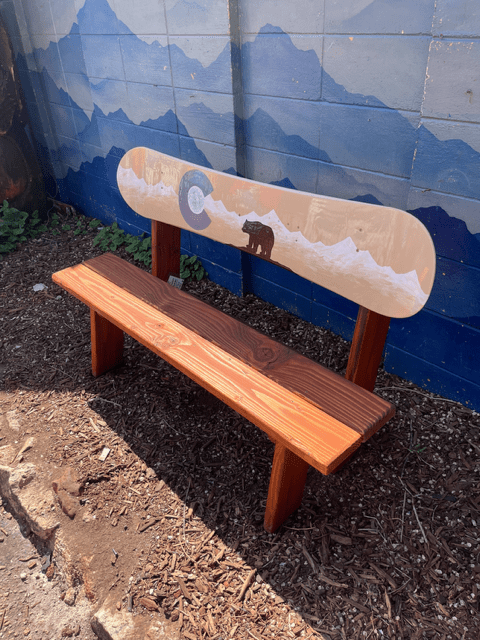
If the gift is more about where it came from than what it costs, the Colorado made gifts collection is the one. Everything in it is built here in Manitou Springs out of skis and boards that were on Colorado mountains, and that provenance is the whole point for a lot of people who moved away and miss it.
Practical timing note. Made to order means two to four weeks, so a chair ordered on December 20th is a February chair. That is genuinely fine for outdoor furniture, and honestly better, because February is when the recipient is most likely to be standing on their patio thinking about it. Print the product page, put it in a card, and let the real thing show up when there is somewhere to put it.
For a lower commitment gift that still lands, look at the gift items category. Smaller pieces, same shop, same hands. The set of two wall mounted ski tip bottle openers is $99, has a magnetic catch so the cap never hits the deck, and gets used about four hundred times a year. And if the person you are buying for hosts more than they ski these days, the apres ski gifts collection is where the shot skis and drink bindings live.
Frequently Asked Questions
Can I really leave your chairs outside all winter?
Yes. The Douglas Fir base is hand painted in exterior oils and the skis are already built for wet snow. Keep the legs out of standing water and knock heavy snow off after a big storm and that is the entire maintenance routine.
Will the paint crack or peel in the cold?
Exterior oil paint stays flexible through freeze thaw cycles, which is exactly why we use it instead of a hard topcoat. Every chair carries a 3 year hassle free warranty, so if something does go wrong, call us.
Do I need a cover?
Not really, and a non breathable cover can trap moisture and do more harm than the snow would. If you want to cover something, use a breathable cover and leave the bottom open so air can move.
How long does an order take in the winter?
Everything is made to order and runs two to four weeks. Most chairs ship free to the lower 48, and we will tell you honestly where your build sits in the queue if you call.
Can I add rockers later, or does it have to be decided up front?
Tell us at order time. The rocker conversion is $75 more and the rockers are cut from repurposed oak wine barrel slats, which is the most weather resistant part of the whole chair.
Come Talk to Us Before You Buy Another Set
We are in Manitou Springs, we build everything here, and we would rather spend ten minutes on the phone figuring out what actually fits your deck than sell you the wrong chair. Bring the dimensions, tell us where the wind comes from, and tell us what colors you cannot stand. That last one saves everybody time.
Call 303.775.7273 or start with the patio sets and see what a winter patio can look like when the furniture is not scared of the weather.