Handmade Outdoor Chairs From Local Artisans, Not a Warehouse
There is a specific sound a flat pack chair makes about fourteen months in. Not a crack, more of a soft complaint from one of the joints when you shift your weight. You hear it, you make a note to look at it, and then one afternoon in July the whole thing folds sideways with you in it. Everybody who buys outdoor furniture has heard that sound at least once.
What Handmade Means When You Can Watch It Happen
The word handmade has been stretched so far it barely holds weight anymore. Half the furniture sold as handcrafted was assembled by a person, sure, from parts cut by a machine in a building that person will never see. That is not a lie exactly. It is just not what most people picture.
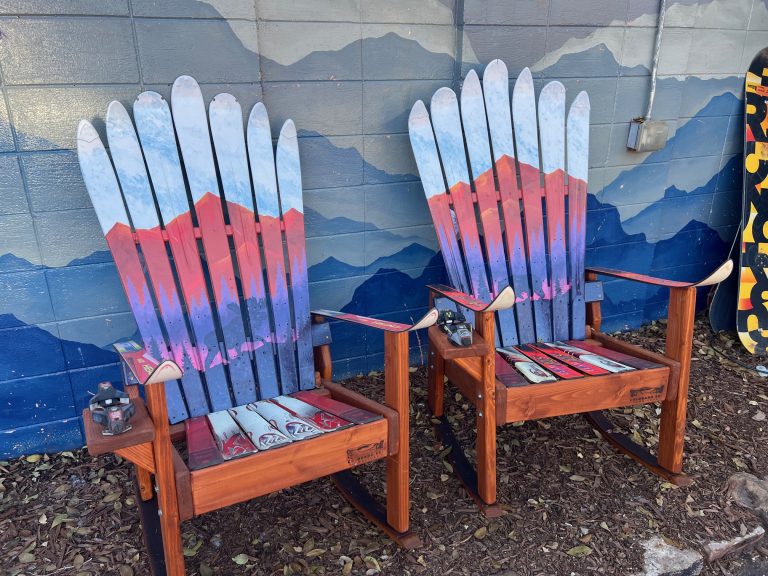
Here is the version that happens in our shop in Manitou Springs, Colorado. Somebody pulls retired skis out of a pile, sorts them by graphic and length, and decides which four or five pairs are going to become one chair. Somebody else cuts oak staves out of a whiskey barrel that spent years holding whiskey. A third person rounds every edge to a 3/8 inch radius before assembly, which is a tedious job with no marketing value whatsoever and the only reason nobody ever catches a forearm on one of these chairs.
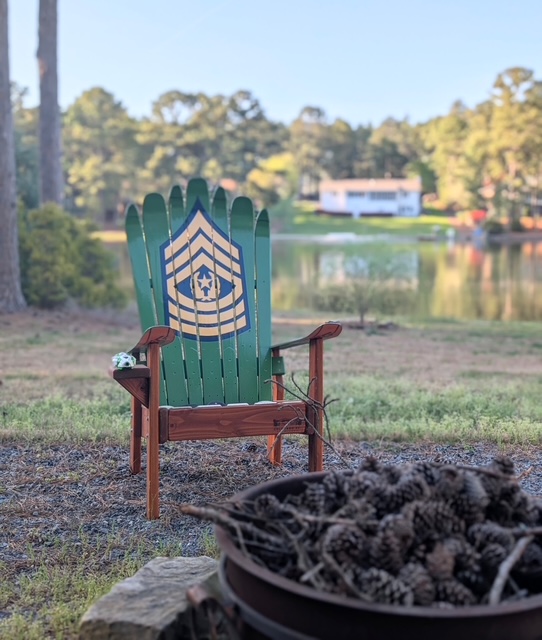
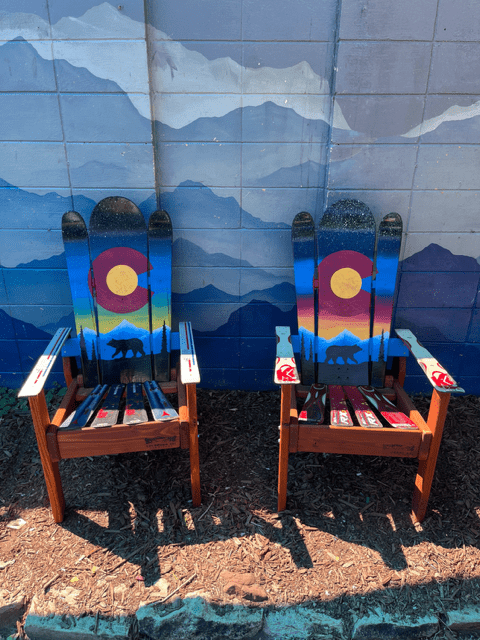
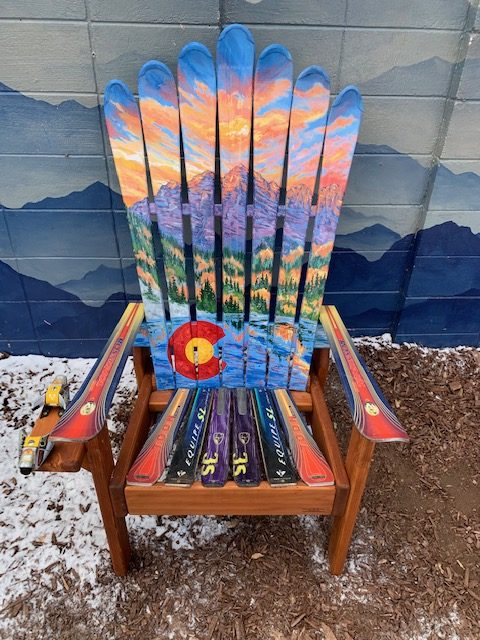
Then a person stands in front of the finished chair with a brush and paints the mural. One chair, one brush, no printed panel. That takes as long as it takes.
That is what handmade outdoor chairs from local artisans looks like in practice. Not a story about heritage craft, just a small building with sawdust on the floor and a queue of orders on the wall. The people doing the work ski the mountains the skis came off. When you call the shop, you are talking to somebody who has personally sanded a chair.
The measurable result is boring and specific. A Douglas Fir base instead of whatever softwood was cheapest that quarter. Exterior oil paint that stays where it was put. 400 lb capacity. A three year hassle free warranty. Yup. None of that is romantic. All of it is why the chair is still on the deck in year nine.
Where the Wood Actually Comes From
Every piece in the shop starts as something that already had a working life, which is a nicer way of saying we buy other people’s leftovers.
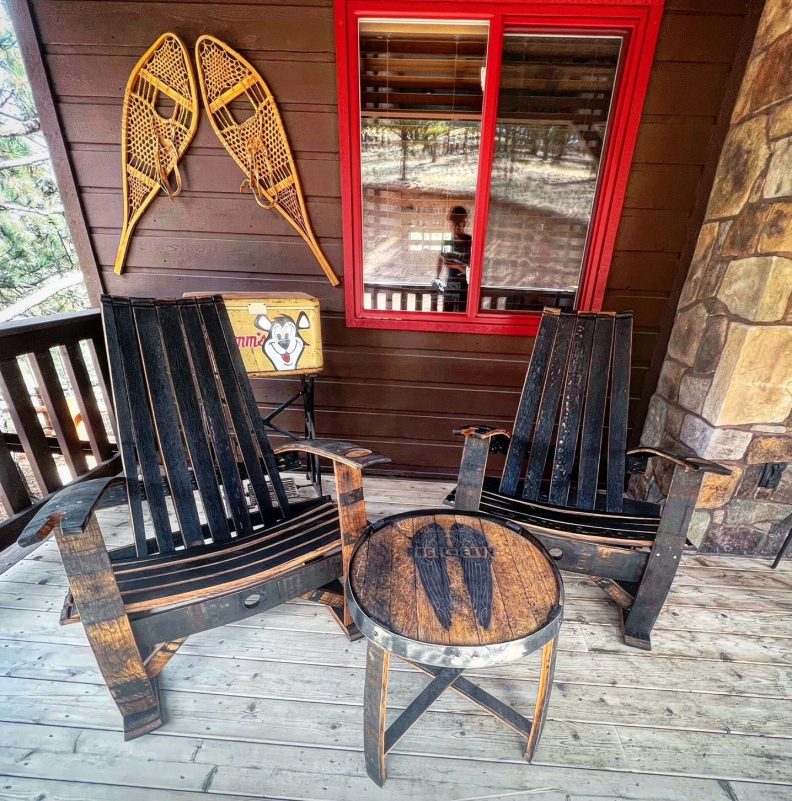
The barrel furniture is built from reclaimed oak whiskey and wine barrel staves. Real barrels, used for their actual purpose first, which is why the inside faces are toasted and stained and no two staves match. A cooper made that oak bend by steaming and hooping it, and that curve is already in the wood before we touch it. You cannot fake that curve with a jig. The Whiskey Barrel Adirondack Chairs with Matching Side Table set uses that stave curve for the seat and back, which is why it feels like the chair was built around a person rather than a spreadsheet.
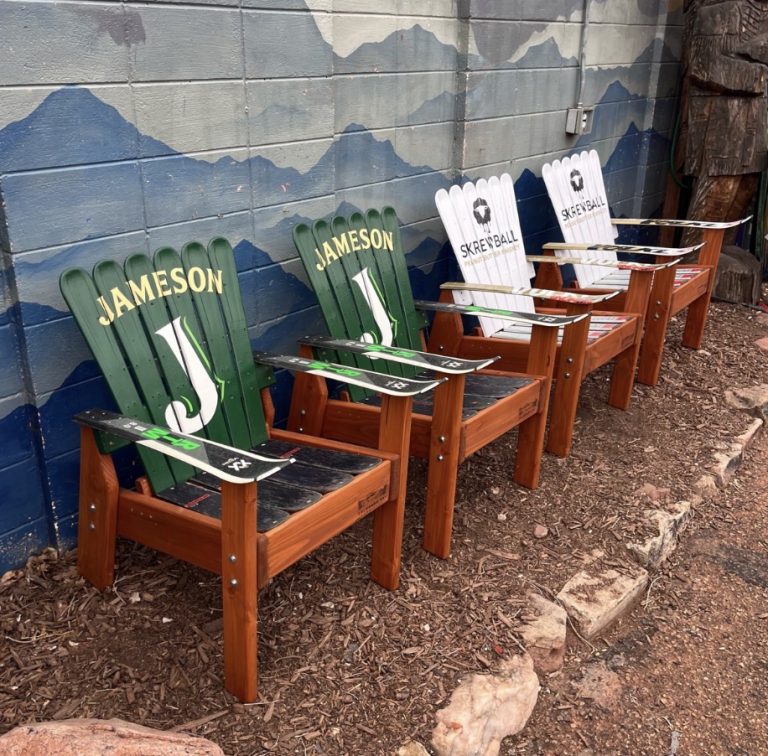
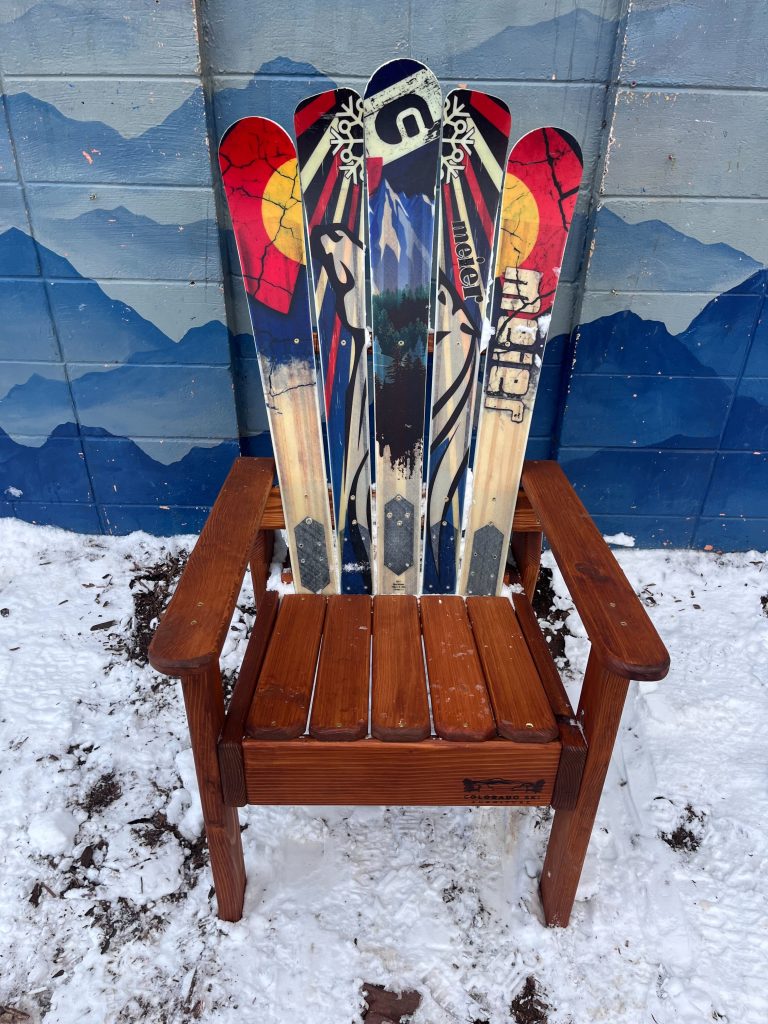
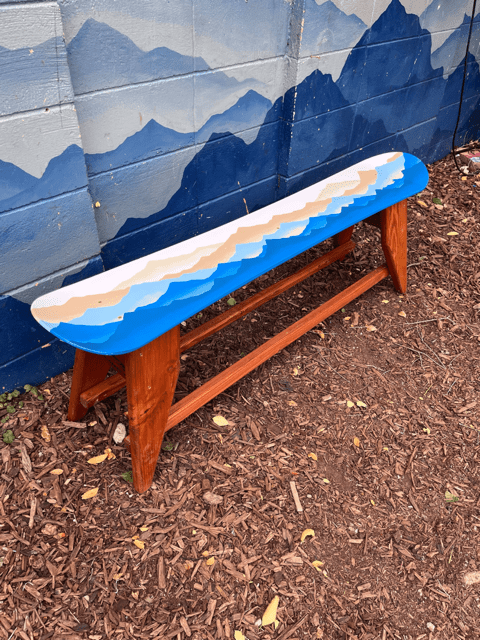
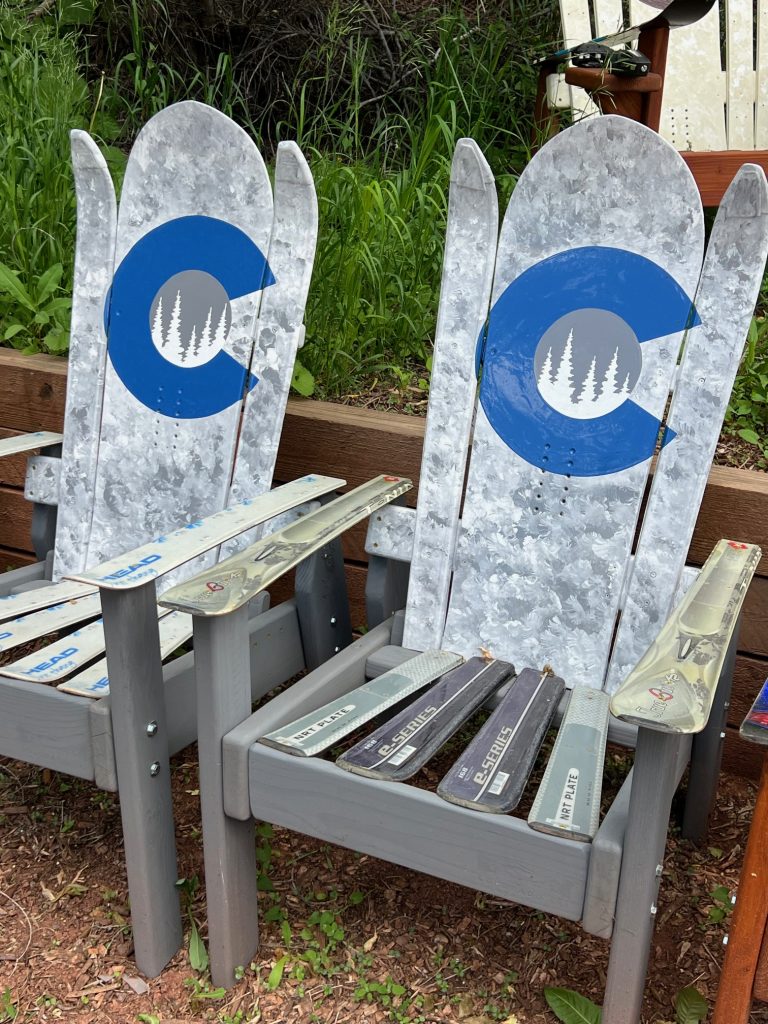
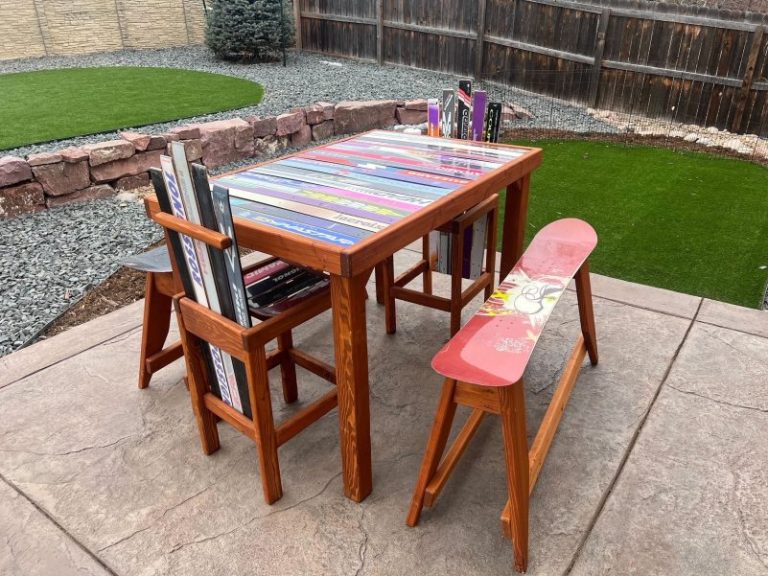
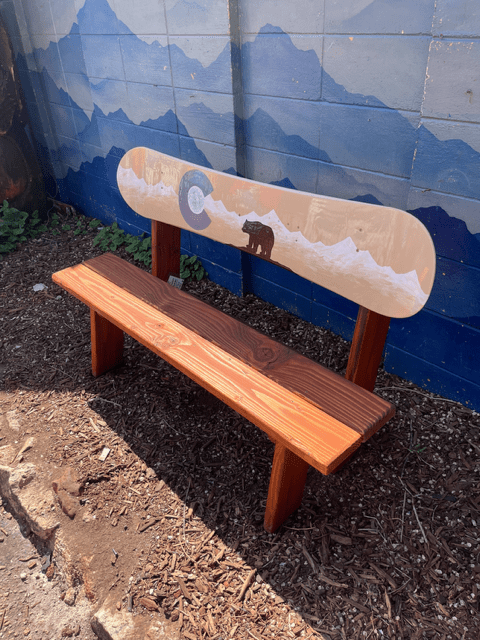
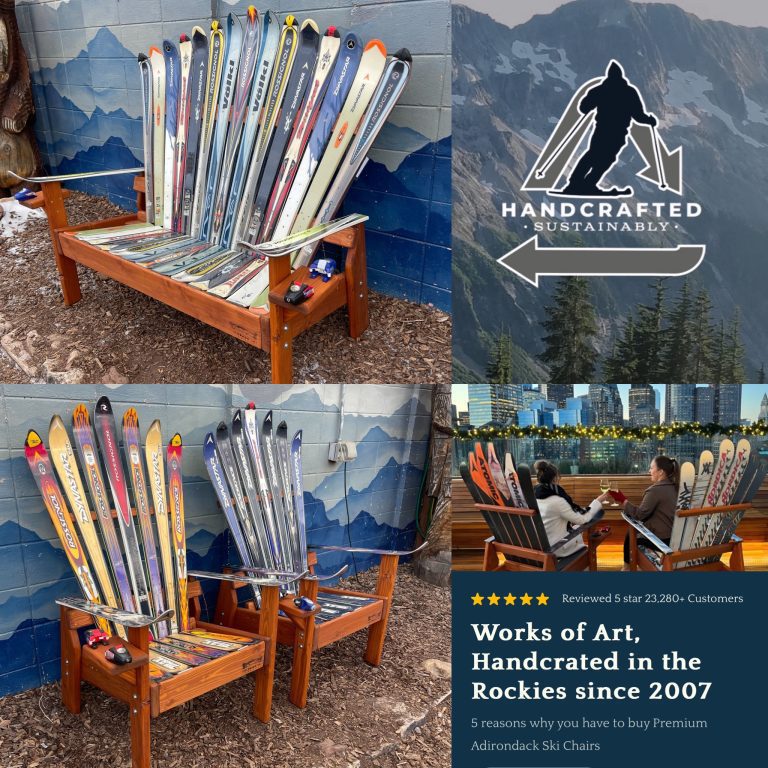
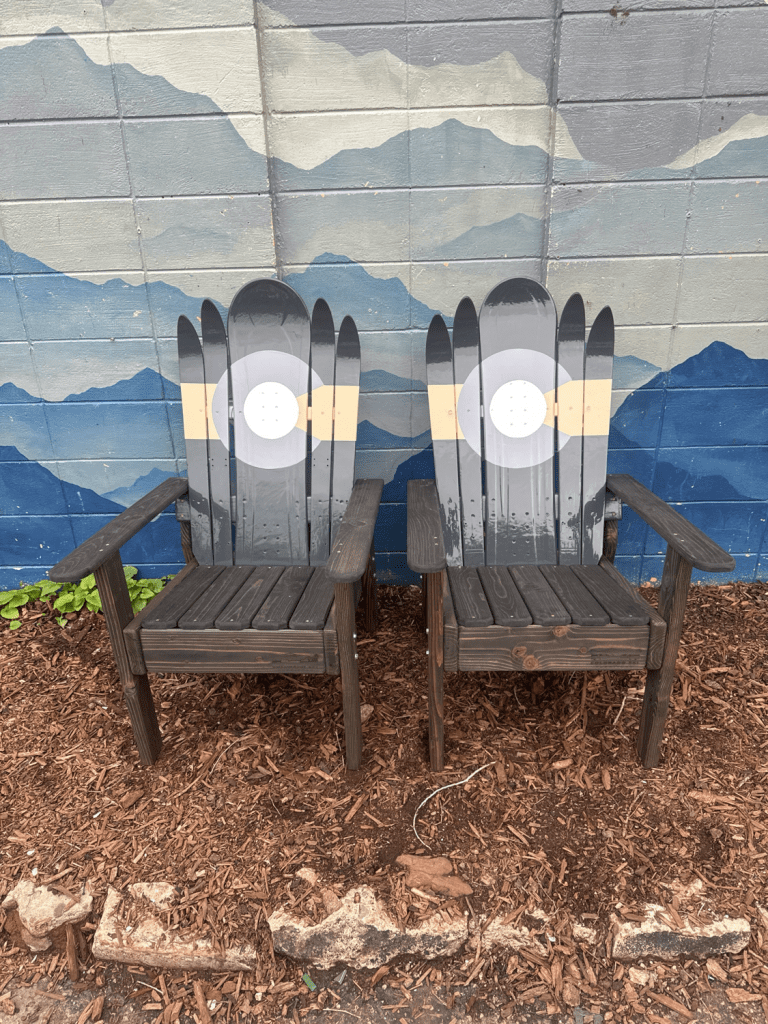
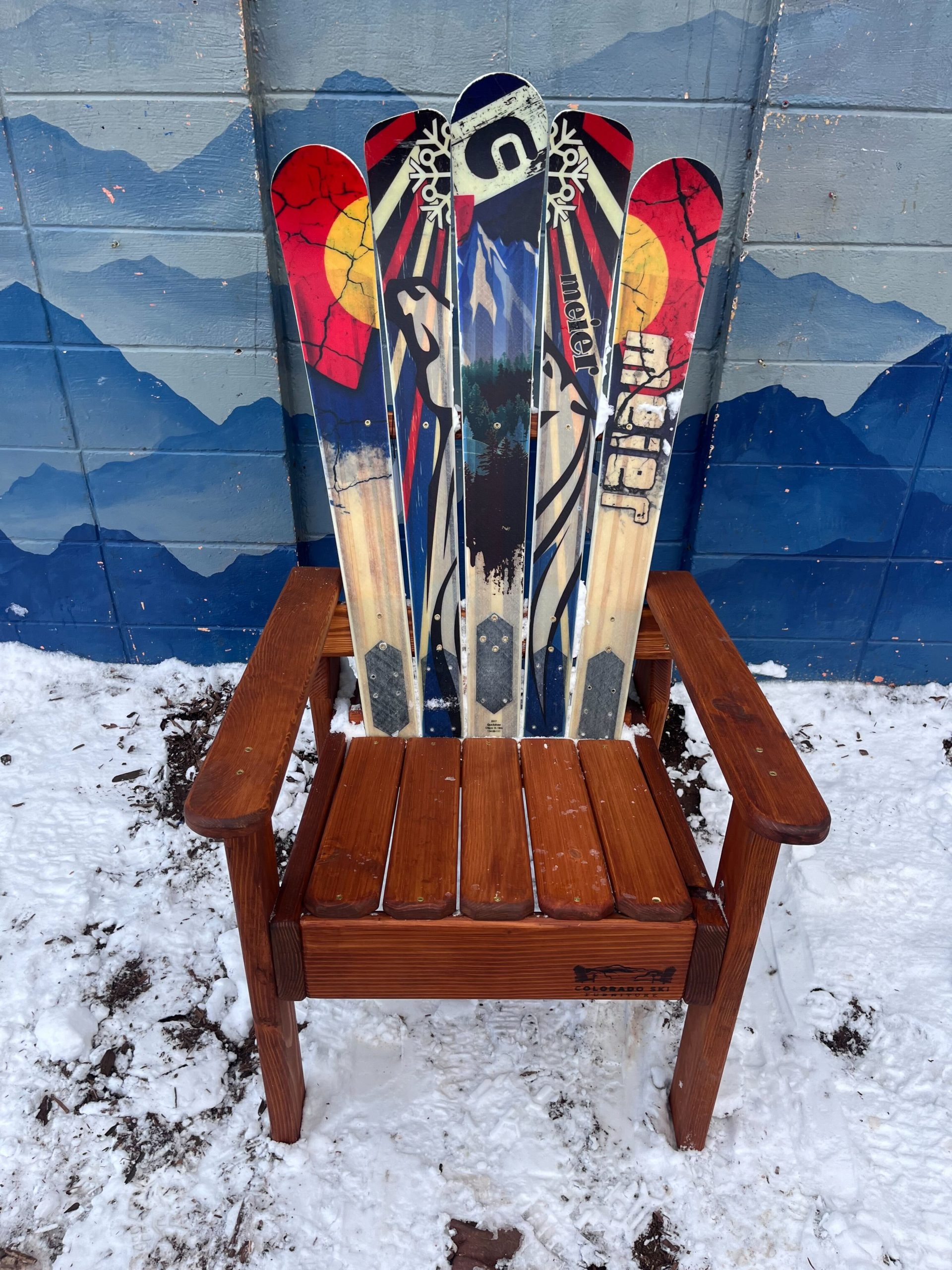
The ski furniture uses retired skis. One Adirondack ski chair takes four to five pairs. A matched set of two takes eight to ten pairs, which is a genuine sourcing problem some months and the reason lead times move around. Snowboard chairs need at least three boards, since a board is wider but there are far fewer of them retiring in any given season. A single board on its own makes a good coffee table or bench, and that is often the better use of one nice board.
Underneath both is Douglas Fir. It is strong, it takes fasteners without splitting, and it holds paint. The barrel pieces get oiled and sealed with four heavy coats of marine varnish. The painted ski pieces get exterior oils. Different finishes for different materials, chosen because they work rather than because one supplier gave a deal on a pallet of it.
The rocker conversion, if you want one, runs $75 more and is built on repurposed oak wine barrel slats. Even the rockers are salvage.
What the Extra Money Actually Buys
Time to be direct, since anybody reading this can do arithmetic. A handmade chair from a small Colorado shop costs several times what a molded resin chair costs. That gap is real and no amount of talk about craftsmanship makes it disappear.
So here is the honest accounting. You are paying for material that costs more than plastic, labor performed by people earning a real wage in Colorado, and a finish schedule that takes days instead of minutes. You are also paying for the fact that a small shop cannot spread a mistake across a hundred thousand units. If a chair goes out wrong, it comes back and gets fixed by the person who built it. That is not generosity, it is just what happens when the shop is small enough that everybody knows whose work it was.
What you are not paying for is a marketing department, a licensing deal, or a warehouse in three states. There is no middle layer. The price on the site is the shop’s price.
The math that matters is cost per year. A cheap outdoor chair lasts two to four seasons in a climate like this before something structural gives up. A chair built on Douglas Fir with a proper exterior finish is still in service after a decade, and the only thing that has changed is the paint has softened on the sun side. Divide accordingly. It usually comes out in favor of the expensive chair, and if it does not, buy the cheap one. We would rather say that than pretend otherwise.
Here is the part that does not show up in any calculation. Nobody has ever asked a guest about their resin chair. People ask about these constantly, mostly because they want to know if those are real skis. They are.
Who Buys From a Small Shop, and Who Should Not
The typical customer is somewhere between fifty and sixty five, learned to ski on straight boards, and has bought enough furniture to have opinions. That crowd tends to go straight to the Retro Chair built from all vintage skis, $675, because they recognize half the topsheets on it. They are not looking for a bargain and they are not looking to be flattered. They want to know what it is made of, who made it, and what happens if it breaks. Three questions, answerable in about ninety seconds.
Second group is people furnishing a rental or a second property who got tired of replacing seating every other spring. Turnover cost is a real number for them and they run it. Handmade wins that comparison more often than people expect, because a chair that survives eight winters of guests treating it like it is not theirs is worth a lot.
Third group is gift buyers, usually for a retirement, a big birthday, or somebody who just bought a place in the mountains.
Now the honest disqualifiers, because a shop that pretends everyone should buy from it is not worth listening to. If you need six chairs by Friday, a small shop is the wrong call, unless something in Ready to Ship happens to fit. If you move every eighteen months and do not want to haul furniture, buy something light and disposable. If your outdoor space gets used twice a summer, spend the money on something you will actually touch.
And if you want everything to match perfectly, salvage is going to frustrate you. Barrel staves come out of barrels that aged different liquid for different lengths of time. Skis come out of a pile. Each piece takes on its own look from the toasting of the barrel and the wear on the ski, and that variation is the point, not a defect. Some people love it. A few people do not, and it is better to know which one you are before ordering.
Where These Chairs End Up
The most common home is a deck or a patio, facing whatever the good view is. Barrel chairs run roughly 40 inches tall, 34 inches deep, and 28 inches wide, so they take up less footprint than a full ski chair and fit tighter spaces. Ski chairs are 45 inches tall, 36 deep, 32 wide, with some models built to 55 inches tall for people who want more back behind their shoulders, which is what the XXL chairs are about.
Fire pit rings are the second most common. The reclining angle already matches what you want when you are looking at a fire, and the arms are wide enough to hold a plate. Three or four chairs in a loose circle with a table in reach is the arrangement people keep landing on, which is why sets exist. Have a look at Patio Sets if that is the shape of the project.
Indoors is a bigger category than most people assume. Barrel chairs work inside, which surprises folks, and a pair flanking a woodstove in a great room looks intentional in a way that store bought accent chairs never quite manage. The wine stem holder in the armrest suddenly makes a lot more sense in a living room too. The Indoor Decor and Furniture section covers the pieces built with inside use in mind.
Then there are the odd placements that turn out to be the best ones. At the end of a path mowed through a meadow. On a dock. In a garage bay that got converted into a hangout. On the flat roof of a shop building, which one customer did and then sent photos of, and honestly, good call.
Businesses buy them too. Tasting rooms, lodges, breweries, offices with a patio nobody used until there was somewhere decent to sit.
The Part a Factory Cannot Do
Customization is where a small shop stops competing on price and starts competing on things a factory physically cannot offer.
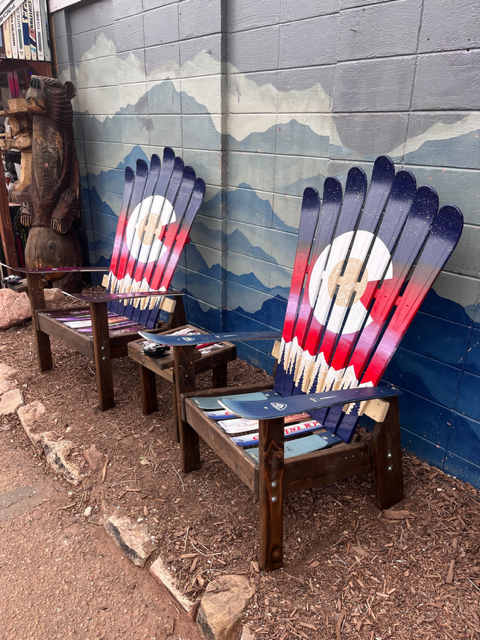
Murals are hand painted in exterior oils. A ridgeline somebody can see from their own deck, aspens at night, a flag, an animal, a color scheme pulled off the front door of the house. Send a photo and it can end up on a seat back. Names, dates, and phrases get painted across the front board, and that is the detail people notice right after they notice the skis. A cabin name. An elevation. A wedding year.
On the Whiskey Barrel Adirondack Chairs with Matching Side Table, custom text across the front, arms, side, or back is a common request. Additional fees may apply for artwork, which the shop will tell you before starting rather than after.
One firm rule, and it exists for good reasons. A logo is never painted. Hand painting a trademarked mark means getting the proportions slightly wrong and making everybody unhappy, including the brand’s legal department. A logo goes on as a logo decal, floated onto a painted background so it sits flush and reads as part of the chair. Aluminum and plastic appliques are the alternatives when the job needs physical presence rather than a flat mark. Branded pricing is quoted on a call, because the variables are real and no dropdown menu captures them.
The sentimental work is the other thing no factory touches. Customers ship in their own skis. A parent’s pair. The boards somebody learned on in 1978. A set retired after a knee replacement. Those become a chair for that family and nobody else, and the shop treats them accordingly. See Sentimental for how that work looks when it is finished.
Care, and What the Warranty Actually Covers
The care instructions are short enough to be suspicious of, so here they are in full.
Painted ski chairs live outside year round. Exterior oil paint over a Douglas Fir base handles sun, rain, and snow. No cover needed, and covers often cause trouble by trapping moisture against the wood. In fall, sweep pine needles and leaves out of the seat slats before heavy snow, since debris holds water and standing water in a joint for four months is the only thing that really works against the chair. That is five minutes with a broom, once a year.
Barrel pieces are sealed with four heavy coats of marine varnish, sanded smooth underneath. They handle outdoor use well and clean up with mild soap and water. If a barrel chair is going to live in full sun at altitude permanently, a light recoat every few years keeps the varnish where you want it. Indoors, they need nothing but dusting.
Spring cleaning for anything outdoors is soap, water, and a soft brush. Skip the pressure washer, which drives water into end grain and accomplishes nothing a sponge cannot.
The three year warranty covers the things that should not happen. Joints failing, structural problems, workmanship. What it does not cover is paint gently aging in high altitude sun, because that is not a defect, that is physics. Most owners go five to eight years before they think about a recoat, and plenty never bother because the weathered look grows on them.
One more note. If something does go wrong, call the shop. Do not fill out a form and wait. Call. Somebody who knows how the chair was built will pick up.
Giving One as a Gift
A handmade chair is an unusually good gift for a specific reason: it cannot be quietly put in a closet. It goes on the deck the first evening and stays there, and every visitor asks about it, which means the person you gave it to gets to tell the story repeatedly. That is most of what a good gift does.
It lands hardest for retirements, milestone birthdays, anniversaries, and housewarmings for somebody who just bought a place in the mountains. Add a name or a date to the front board and it stops being furniture and starts being a marker of the occasion. That costs very little and changes the whole thing.
Sets work well as a joint gift when several people are chipping in, which happens often for retirements. Two chairs and a table between them is a complete gift rather than a piece of one, and there is a multi chair discount worth asking about on the phone.
The practical constraint is timing. Made to order runs two to four weeks, and custom artwork can push that. If the date is closer than that, look at Ready to Ship for pieces already finished and sitting in the shop, or at Gift Items for smaller work when a full chair is more than the occasion calls for.
The one thing to avoid is ordering a fully custom mural eight days before an event and hoping. The shop will tell you no, politely, and everybody is better off.
How Ordering Works
Simple version: order on the site, the piece gets built, it ships. Made to order is two to four weeks depending on the queue and the artwork. Most chairs ship free to the lower 48, which on furniture this size is worth real money. Some pieces require simple assembly and come with what they need.
Anything customized starts with a phone call to 303.775.7273. Describe the space, the colors, the view you want painted, whether one chair or a pair makes sense. Ten minutes on the phone replaces a week of messages, and it is the only way branded work gets quoted honestly.
Colorado delivery is handled locally, so sets going to the Front Range or up into the mountains do not ride a freight network. Everywhere else in the lower 48 ships out.
Best option, if you can manage it, is walking into the shop in Manitou Springs and picking the exact chair. Salvage material does not photograph the way it looks in person. Barrel staves have depth and color variation that flattens out in a product shot, and the topsheet graphics on a ski chair are always better in the flesh. People drive over from Colorado Springs and Pueblo to do this, and it is genuinely the right way to buy one.
If a full barrel set is more than you need, the Barrel Chairs and Sets category has smaller configurations, and Adirondack Ski Chairs covers the single seat options, starting with the Signature Customizable Ski Chair at $595 where you name the brands and colors you want. If you would rather do half the work yourself, the complete wooden chair base is $299 and you add your own skis at home. We will not judge the results. Much.
Frequently Asked Questions
What does handmade actually mean here?
Every piece is built by hand in the shop in Manitou Springs, Colorado, from cutting and sorting the salvaged material to rounding the edges and painting the mural. Murals are hand painted in exterior oils, one chair at a time, not printed and applied.
Why do handmade outdoor chairs cost more than store bought?
Real material, Colorado labor, and a multi day finish schedule cost more than injection molded plastic. The trade is lifespan, since a chair built on Douglas Fir with a proper exterior finish stays in service for a decade instead of two or three seasons.
What are the chairs made from?
Barrel pieces use reclaimed oak whiskey and wine barrel staves sealed with four heavy coats of marine varnish. Ski chairs use retired skis, four to five pairs per chair, on a Douglas Fir base finished in exterior oil paint.
Can I see them in person before buying?
Yes. The shop is in Manitou Springs and you can pick your exact chair off the floor, which is the best way to buy salvage furniture since grain and topsheet graphics never photograph accurately.
How long is the wait, and do you ship?
Made to order runs two to four weeks, and some finished pieces are available immediately in the Ready to Ship section. Most chairs ship free to the lower 48, with local delivery handled directly across Colorado.
If you already know roughly what you want, a phone call is faster than anything else. Ring 303.775.7273 and talk to whoever picks up, or start with the Whiskey Barrel Adirondack Chairs with Matching Side Table and see whether that is the shape of the thing you have been picturing on the deck.