The Handmade Ski Chair Gift for Dad That He’ll Actually Use
There’s a chair on your dad’s back patio he never sits in. It came in a flat box, it rocks on the flagstone in a way it was not designed to, and the webbing has faded to the color of weak tea. Meanwhile he keeps hauling a kitchen chair out the sliding door every evening, which tells you most of what you need to know about what he actually wants.
Why Most Father’s Day Chairs End Up in the Garage by August
Gift furniture has a failure pattern and it’s remarkably consistent. Somebody buys a chair in June because it photographs well. It arrives in a carton with a hex key taped to the instruction sheet. It gets assembled on the driveway, carried around back, and it looks pretty good for about six weeks. Then the fasteners loosen, the slats cup, and one arm develops a personality. By Labor Day it’s in the garage behind the snowblower, and nobody says anything about it because nobody wants to be the person who brings it up.
The problem isn’t that your dad is hard to shop for. The problem is that most outdoor seating is built to a price point rather than to a job. A chair that has to survive a Colorado summer, a hailstorm in July, and then sit under two feet of snow while everyone forgets it exists is a different object than a chair that has to look good in a catalog photo. One of those gets engineered. The other gets styled.
What changes the math is weight and joinery. A chair heavy enough that the wind doesn’t move it, joined with hardware rather than plastic pins, sitting on a base that was cut from actual lumber instead of pressed board, behaves differently on year three. It’s still the chair he sits in. That’s the whole test, and it’s a harder test than it sounds.
So here’s the honest pitch. A handmade ski chair gift for dad is not a cheaper gift than the flat box version. It’s a gift you only have to give once. He’ll be sitting in it in 2035 and you’ll still be hearing about it, probably more than you want to.
What a Ski Chair Actually Is, Once You Take It Apart
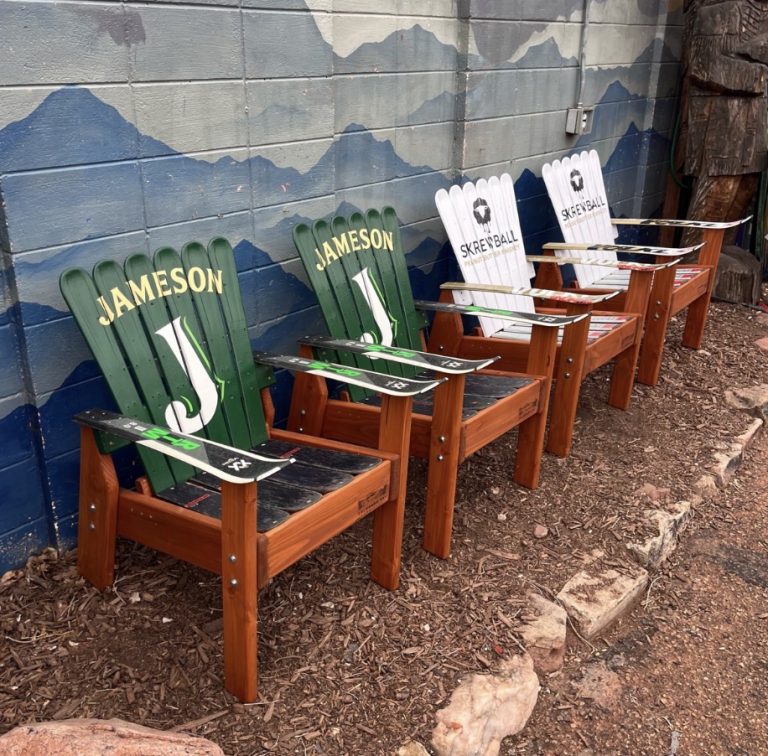
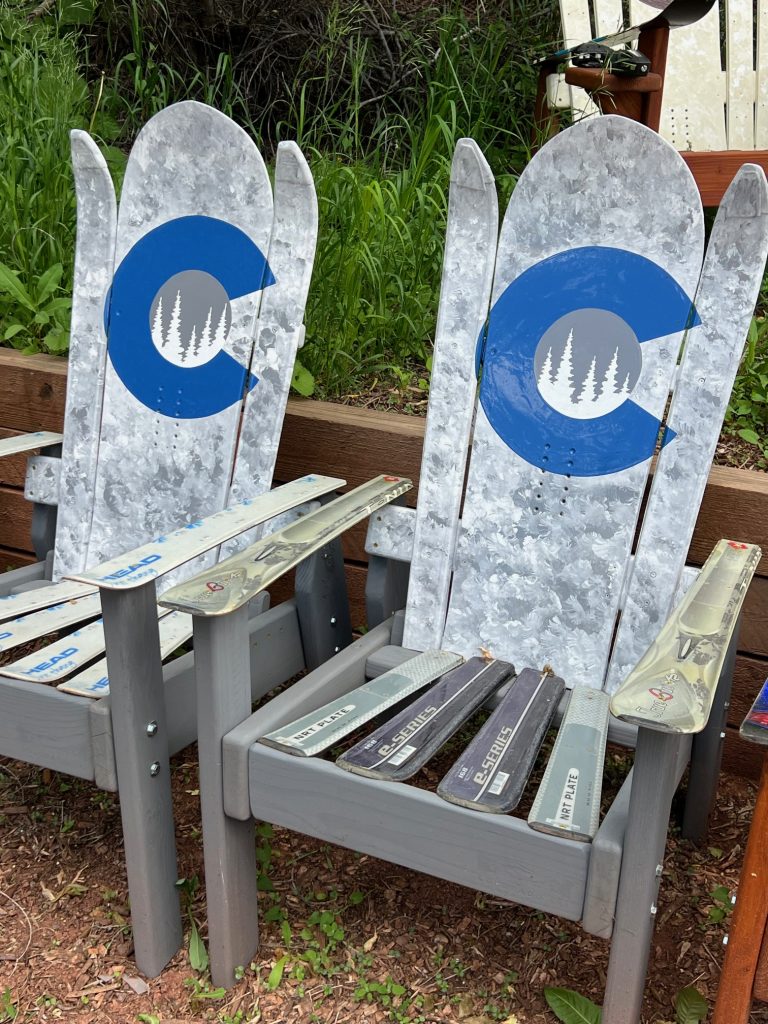
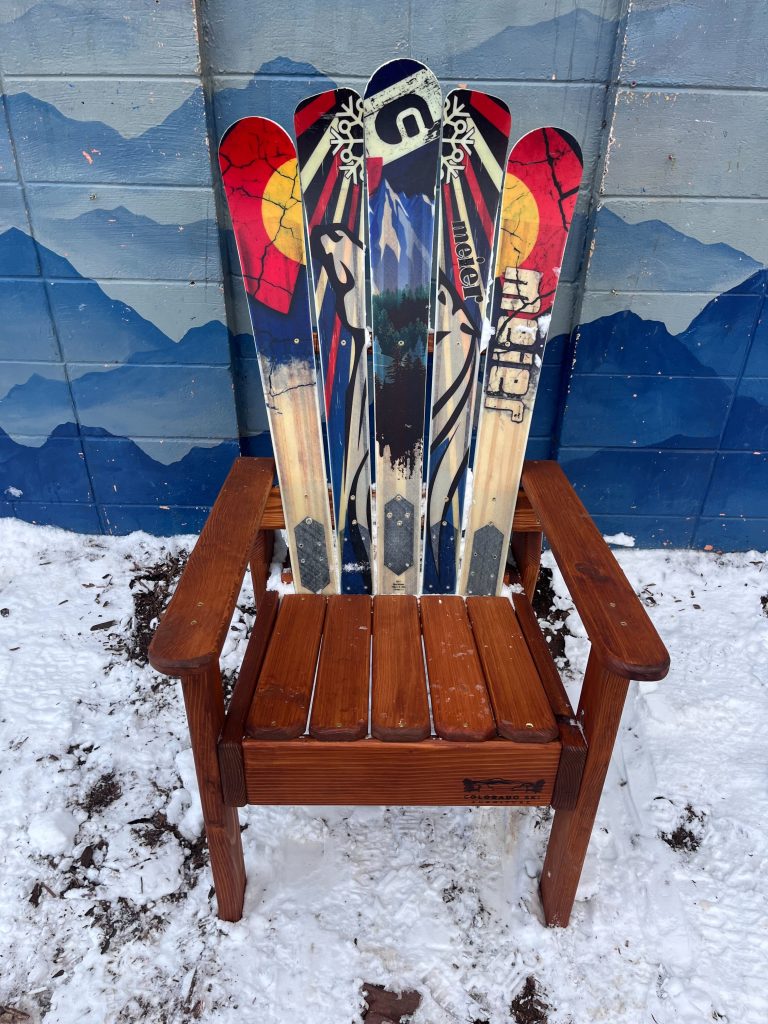
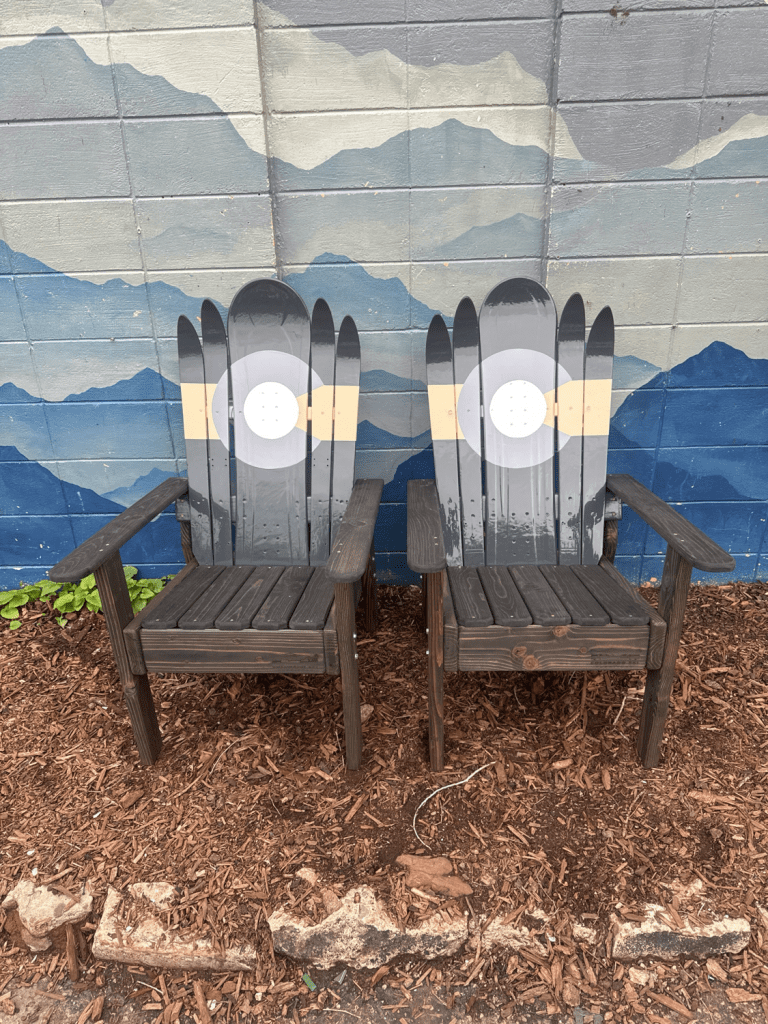
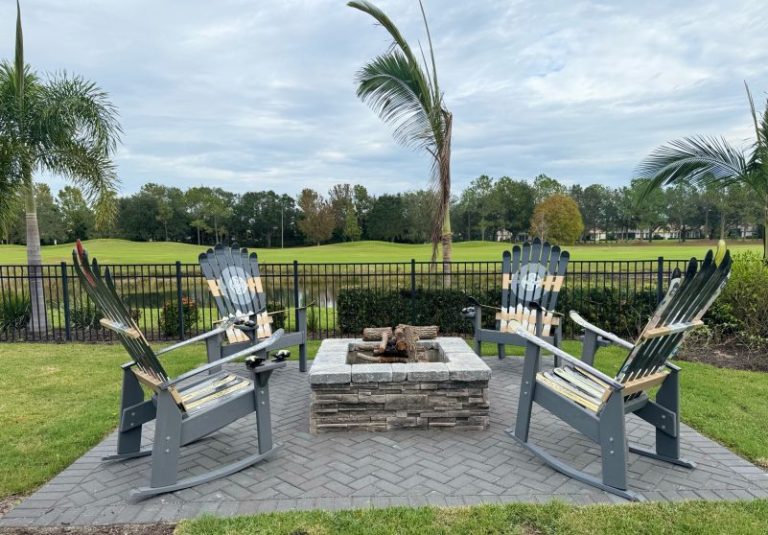
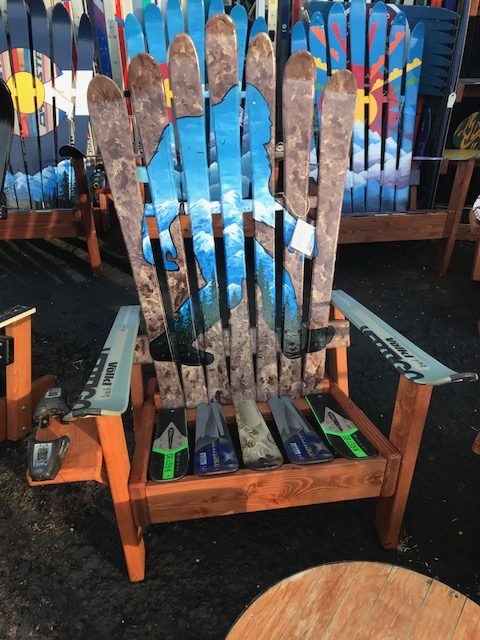
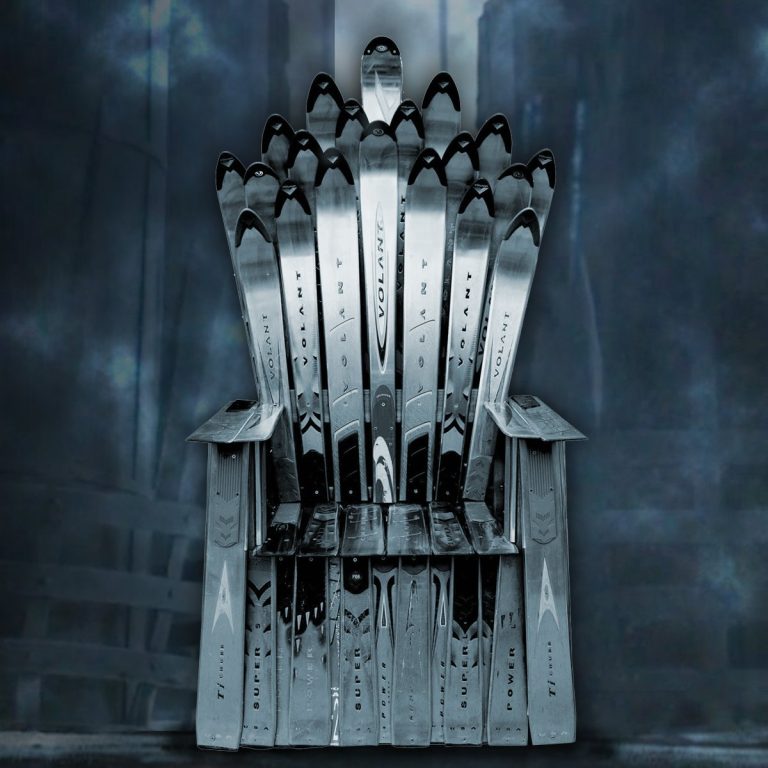
Strip the romance off and a ski chair is an Adirondack chair whose seat and back slats are retired downhill skis. That’s it. The skis are real, they’ve been skied, and they came off a mountain rather than out of a mold. One chair takes four to five pairs. If you buy a set of two, that’s eight to ten pairs of skis pulled out of circulation and turned into something that gets used every evening instead of leaning in a corner of somebody’s garage.
Skis turn out to be a strange and excellent material for this. They’re laminated wood and metal and composite, engineered to flex under a two hundred pound person going thirty miles an hour, and then engineered again to shrug off water and cold and ultraviolet for a decade of weekends. Take that same construction and lay it flat as a seat slat and you get a surface that’s already weatherproof, already stiff, and already used to being sat on hard. The topsheet graphics are a bonus. Old ski graphics from the eighties and nineties are genuinely great, and a lot of dads recognize the exact model they learned on.
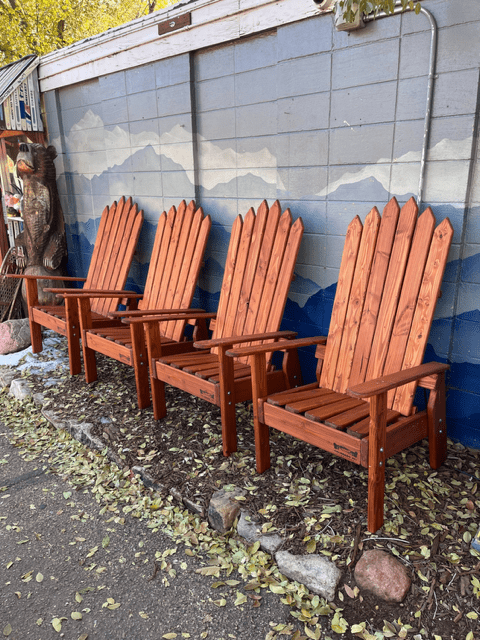
Underneath, the frame is Douglas Fir. That’s the load carrying part, cut and joined and finished to hold the whole thing square. The chairs run around 45 inches tall by 36 deep and 32 wide, with some tall base builds going up to 55 inches. They’re rated to 400 pounds. They’re comfortable for people anywhere from about three feet to six foot ten, which sounds like marketing until you watch a genuinely tall man sit down in one and stop apologizing for his knees.
And there’s a cup holder cut into the arm, made from an actual ski binding. Yup. It holds a beer, and it looks like the thing it used to be.
How One Gets Built in Manitou Springs
Every chair on this site is made in Manitou Springs, Colorado, which is a small town wedged into the base of Pikes Peak where the streets were laid out before anybody owned a car. The shop is there. The skis come in from resorts, shops, rental fleets and people who cleaned out a garage and could not stand to throw a pair away. If where a thing was made is the part that matters, especially for a dad who left Colorado and still tells people about it, the gifts actually made in Colorado page collects the pieces that come out of this shop.
The skis get sorted first, and that’s more work than it sounds. Length, width, graphic, condition, and whether a set has enough matching pairs to carry a whole chair. Then they get cut, drilled and laid out. The Douglas Fir base is built separately and the ski slats get fastened down across it. Nothing about this is fast. A single chair passes through a lot of hands and a lot of steps, and the shop is honest about the fact that production runs two to four weeks in normal times.
Paint is the part people underestimate. Anything painted here is done in exterior oil paint, by hand, with a brush, by a person standing at the chair. That’s a slow way to do it and it’s the reason the finish survives outdoors. Oil paint on a properly prepped surface moves with the wood and the weather rather than sitting on top of it like a sticker and then flaking off in year two.
Then it gets a three year hassle free warranty. Yup. Not a warranty with a claims process designed to exhaust you. If something’s wrong, you call, and it gets made right. Small shop, phone number on the site, actual person on the other end.
The Mural Is Painted. The Logo Is Never Painted.
This trips people up on the phone, so it’s worth being clear about. There are two different things happening on the back of a chair and they’re made in completely different ways.
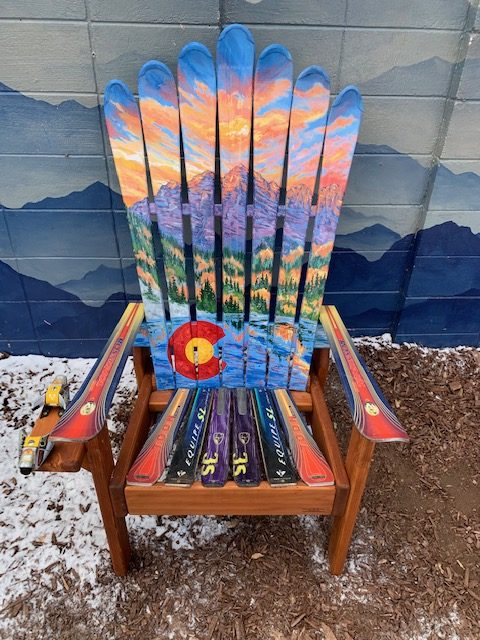
A mural is hand painted. The Aspen Maroon Bells Sunset Mural Ski Chair is the clearest example of what that means. The Bells run across the back slats at sunset, in exterior oils, laid down by a painter who worked from the actual view. The ski slats show through the paint, so the scene has a grain and a break to it that a flat printed panel would never give you. No two come out identical, because no two sets of retired skis do. If your dad has a mountain, a lake, a river or a stretch of trees that means something to him, that’s the process that puts it on a chair. Custom painting is billed at $75 an hour, so a simple scene and an involved one price differently, which is the honest way to do it.
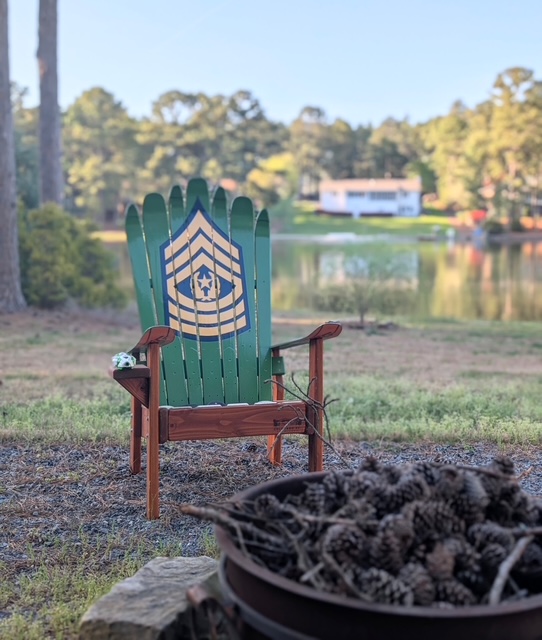
A logo is a different animal. A logo is never painted. It goes on as a logo decal floated onto a painted background, and aluminum or plastic appliques are the alternatives if you want something with more physical presence. There’s a good reason for the rule. A brand mark has to be exactly right, at exactly the right proportions, in exactly the right colors, and a hand brushed approximation of a corporate mark looks wrong to everybody who knows the mark. So the background gets painted and the logo gets applied. Branded pricing gets quoted on a call, because it depends on the mark, the quantity and the finish.
If your dad’s gift is really about his college, his squadron, his shop or his team, that’s the branded route and it starts with a conversation rather than a checkout button.
The Dads Who Actually End Up With These
There’s a type, and it’s broader than you’d guess. The obvious one is the lifelong skier, the guy who learned on straight 205s and still has opinions about it, who will identify the exact skis on his own chair before he sits down. He gets one and then talks about it at every barbecue for a year.
But a lot of these go to dads who barely ski. Somebody who spent thirty years in Colorado and never made it past a green run still knows what those mountains look like at seven in the evening. The chair reads as a piece of where he lives, not as sports memorabilia. That’s a distinction that matters more than the shop expected when it started.
Then there are the retirement chairs. A guy leaves a job he held for twenty six years and the office gets him something with his name on it, and it’s a chair he can put on the deck rather than a plaque he has to find a wall for. Those orders come in constantly, usually with a specific mountain requested and a specific set of colors. Smaller pieces for the same occasion, the ones that go in a box rather than on a truck, are grouped under gift items.
And there are the memorial ones, which are the quiet part of this business. Somebody’s dad passed and the skis he actually rode are still in the garage, and the family sends them in. That chair goes on a porch and it gets sat in, which is a better outcome than a box in a closet. The Sentimental Ski Chair starts at $575 and is the build for that, made from skis you send in rather than skis we found. Those live in sentimental and they get handled with more care than anything else in the shop.
Common thread? None of these people wanted a generic gift. They wanted an object with a story attached to it that they didn’t have to invent.
Where the Chair Lands Once It Gets to His House
Most of them end up on a covered porch or a deck, usually in the spot that already gets the evening sun. That’s not an accident. An Adirondack chair is built at a recline angle that makes it a poor choice for eating dinner and a very good choice for sitting still for two hours, so it naturally migrates to wherever a person wants to sit still for two hours.
Fire pit placement is the second most common. The reclined back means you’re looking at the fire and the sky at the same time instead of hunching forward, and the wide arms hold a drink, a plate and a phone without a side table. If there are two chairs, angle them toward each other by about twenty degrees rather than lining them up parallel. Parallel chairs mean two people staring at a fence. Angled chairs mean a conversation. It’s a small thing and it changes how much the seating gets used.
A surprising number go indoors. Mountain homes, finished basements, front rooms with a view, ski condos where the chair does more design work than any sofa would. The paint and the build don’t care which side of the wall they’re on. If that’s the plan, look through indoor decor furniture and think about scale, because these read bigger inside than they do on a deck.
Cabins, docks, lake houses and the flat spot at the top of a driveway all work. The one place to be thoughtful is full unshaded southern exposure all day, every day, for years. The chair will survive it. The paint just stays richer under a roof, and most owners with an involved mural figure that out on their own within a month.
Making It His Without Making It Fussy
Customization on these runs from a two minute request to a full commission, and honestly the small requests are the ones that land hardest. Ask for a specific ski brand on the seat slats and you’ve turned a nice chair into his chair. If he skied Rossignol his whole life, or K2, or a shop brand from a town he lived in, say so when you order. The shop stocks a lot of retired skis and can usually match a brand if you ask early. That request is the entire point of the Signature Customizable Ski Chair, which starts at $595 and treats the brand and the colors as the order rather than an upcharge. If he learned on straight skis and never quite got over it, the Retro Chair starts at $675 and is built entirely from sixties, seventies and eighties gear.
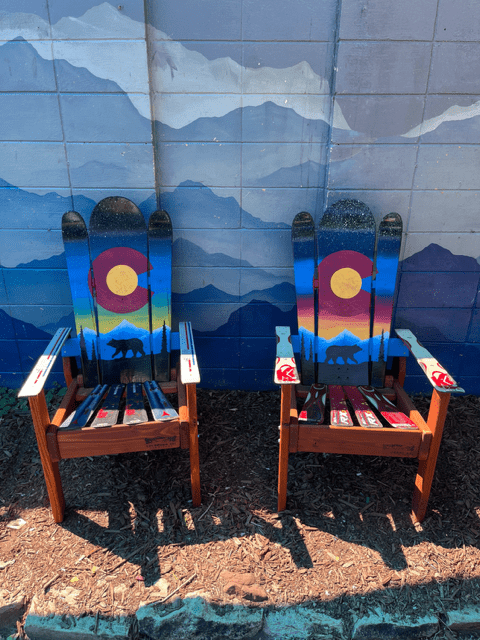
Color is the next lever. Base color, front board, accent stripe, all of it is open. Colorado flag treatments are the most requested by a wide margin, but a base painted to match his house trim is a quieter and frankly better looking choice for a lot of porches.
The rocker conversion is $75 more and it’s built on repurposed oak wine barrel slats, which is a genuinely nice detail. Oak from a barrel, cut and shaped into rockers, under a chair made of skis. If your dad is a porch sitter rather than a fire pit sitter, the rocker is the one upgrade worth arguing for.
Beyond that, hand painted work is billed at $75 an hour and the range is wide. A single elk on a plain background is a short job. The full Maroon Bells at sunset is not. Ask for what you want, get a number, and decide from there. Nothing about the pricing is mysterious once you’re on the phone, and the shop is upfront that it can usually get creative to land inside a budget. If you want to see how far this goes, custom designs is where the one off builds live.
What It Takes to Keep One Looking Right
Less than you’d think, which is the point of building it this way in the first place. The finish is exterior oil paint over ski topsheets and Douglas Fir. It’s weatherproof. It’s meant to sit outside through a full Colorado year without anybody doing anything about it.
Spring is the one moment worth five minutes of attention. Once the snow’s off it, hose the chair down, wipe the arms, and check that the hardware is snug. Wood moves through a freeze and thaw cycle and a quarter turn on a couple of fasteners in April keeps everything tight. That’s the whole spring routine.
Summer is nothing. Sit in it. If a mural chair lives in full sun all day, a porch roof or a cheap cover during a stretch when nobody’s home will keep the colors deeper for longer. Not required, just true.
Fall is when the pine needles and the leaves collect in the seat slat gaps, and clearing them out matters more than it sounds like it should, because packed wet debris is the one thing that keeps moisture sitting against wood instead of running off it. Thirty seconds with a hand and a hose.
Winter, leave it out or bring it in, both are fine. Plenty of these sit under snow all season and come out in April looking like they did in October. If you have easy garage space, using it costs you nothing. If you don’t, don’t lose sleep. And if something does go sideways in the first three years, the warranty covers it and you call. That’s the entire maintenance conversation.
How Ordering Works, and How Late Is Too Late
Two paths, and they matter if you’re shopping against a date. Most chairs are made to order, which means two to four weeks of production time, sometimes longer during the busy stretch from April through June. If Father’s Day is nine days out, that’s tight, and you should call rather than gamble. If you’re still working out what to spend before you work out the date, the ski gifts sorted by budget page lays the whole range out in order, from the small stuff up to a full chair.
The other path is ready to ship, which is exactly what it sounds like. Finished chairs sitting in the shop right now, no production queue, out the door quickly. The selection changes constantly because it’s real inventory, so what’s there today may not be there Thursday. If you’re late, start there.
Shipping is free to the lower 48 on most chairs, with $49 shipping on some. It ships nationwide. Inside Colorado there’s local delivery, and the delivery map covers most of the state, from Colorado Springs and Denver through Breckenridge, Vail, Aspen, Crested Butte, Steamboat, Durango and a long list of towns in between. If you’re in Colorado, ask about delivery rather than assuming freight.
And here’s a move worth stealing if the date’s going to beat you. Order the chair, then print a photo of the exact one you ordered and hand him that. Every dad who has ever received a printed photo of a chair has been fine with it, because the alternative was another polo shirt. If you want to talk through timing, colors or which chair fits his porch, call 303.775.7273 and somebody in the shop will actually pick up.
Frequently Asked Questions
How many skis go into one chair?
One Adirondack ski chair takes four to five pairs of retired downhill skis. A set of two chairs uses eight to ten pairs. The skis are real, previously skied, and sorted by length and condition before anything gets cut.
Can these stay outside all year?
Yes. The Douglas Fir base and the exterior oil paint finish are weatherproof and built for full four season exposure, and plenty of chairs sit under snow all winter. Owners with an involved hand painted mural often keep them under a porch roof anyway, which keeps the colors deeper for longer.
How long does it take to get one?
Made to order chairs run two to four weeks of production time, sometimes longer during spring and early summer. Ready to ship chairs are finished and in the shop and go out fast, so start there if you’re shopping against a deadline.
How big are they, and will a tall guy actually fit?
Most chairs run about 45 inches tall by 36 deep and 32 wide, with some tall base builds reaching 55 inches. They’re rated to 400 pounds and are comfortable for people from about three feet up to six foot ten.
Can we put his company or team logo on one?
Yes, but a logo is never hand painted. The background gets painted and the logo goes on as a decal floated onto it, with aluminum and plastic appliques available as alternatives. Branded pricing is quoted on a call, so phone the shop with the mark and the quantity.
If you want help picking one, that’s what the phone is for. Tell whoever answers what your dad’s porch looks like, which mountain matters to him, and what date you’re up against, and you’ll get a straight answer about whether it’s doable. Browse chairs or go straight to the Aspen Maroon Bells Sunset Mural Ski Chair, then call 303.775.7273. Built in Manitou Springs, Colorado, shipped to the lower 48, and covered for three years.